
Your needs, this model
Does it fit your priorities?
What is the documented use and design of Eclipse Spherical?
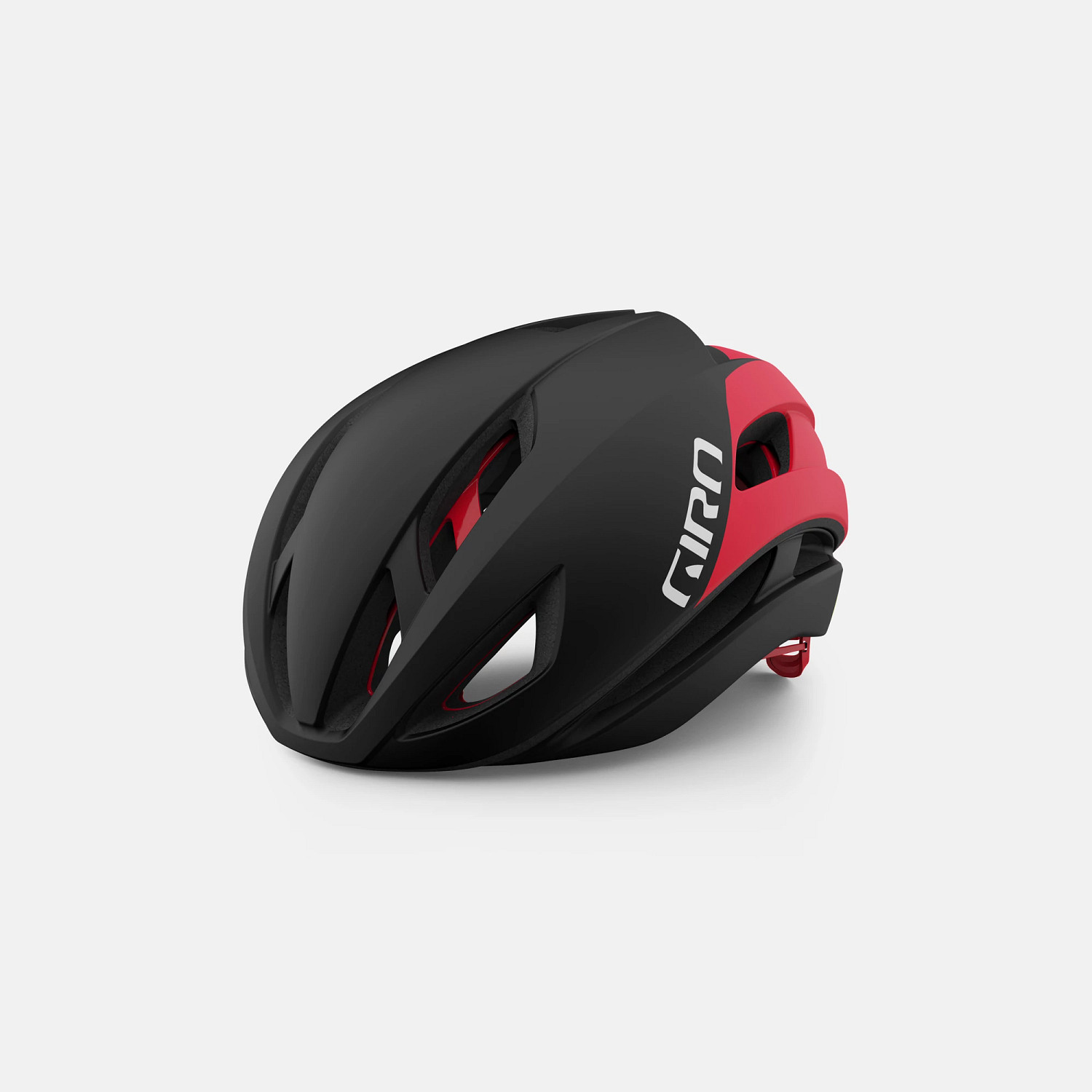
Giro describes the Eclipse Spherical for road and gravel racing, with a streamlined aero shell, 14 Wind Tunnel vents, internal channels and Spherical Technology powered by Mips. Those design descriptions identify its intended role; they do not verify a speed or cooling gain for an individual rider.
Explore this need in the finder →Can the exact current page establish US CPSC compliance?
No explicit current-style CPSC statement appears in the exact style 136 page; it lists CE EN 1078. Virginia Tech's 2023-tested Eclipse Spherical record lists CPSC, but the tested-model record is not linked to the exact current listing style. The finder therefore treats this exact-version field as unknown and will not count it as meeting a required CPSC condition.
Explore this need in the finder →What size and adjuster information should be checked?
The page lists S, M and L, which Giro's shared chart maps to 51–55, 55–59 and 59–63 cm. The product copy refers to Roc Loc 5 Air in its details but Roc Loc 5.5 Air in a feature heading; it describes fit-tension and fore-aft adjustments. Verify the exact hardware and try on the helmet rather than relying on circumference alone.
Explore this need in the finder →The Eclipse Spherical is Giro’s earlier road-and-gravel racing model in a different family from the separately listed Eclipse Pro. The exact US style 100000000300000136 combines Spherical Technology powered by Mips with an aero-focused shell, 14 manufacturer-counted vents and a 270 g size-M figure. That makes it a candidate for a rider comparing aerodynamic design and ventilation in one road half-shell. The sources do not establish a personal fit or a speed gain, and this is not a riding test.
Road and gravel intent, not an independent aero result
Giro describes the Eclipse Spherical for road and gravel racing. Its Transform Air feature is said to streamline airflow across multiple wind angles, and the product page calls it both a fast and highly vented aero-road design. Those are manufacturer claims. The exact page documents 14 Wind Tunnel vents and deep internal channels, but no independent wind-tunnel comparison or cooling measurement was reviewed for this article. A vent count describes openings, not how cool a particular rider will feel under a specific effort, temperature or head position.
Giro lists dual-density Progressive Layering and Spherical Technology powered by Mips. The latter is described as a ball-and-socket design that allows the outer liner to rotate around the inner liner during a crash. This explains the advertised mechanism; it does not mean a rider can predict an injury outcome from a feature label. If your priority is a design detail, compare the exact model wording. If your priority is fit, the product still needs a try-on.
The fit-system wording is inconsistent
The narrative details paragraph on Giro’s exact page calls the adjuster Roc Loc 5 Air. A later key-feature heading calls it Roc Loc 5.5 Air and describes fit-tension and fore-aft adjustments. Because both names appear on the same page, the fact record leaves the precise fit-system generation unresolved rather than selecting one. Ask the seller or manufacturer to confirm the actual adjustment hardware if that distinction matters to you. The fit copy is not evidence that every offered unit uses a particular dial version.
The page lists S, M and L. Giro’s shared adult bicycle chart maps those sizes to 51–55, 55–59 and 59–63 cm, making 51–63 cm a screening span for the sizes actually offered on this page. Giro says the chart is a guide and recommends trying on before riding. The page gives no head-shape profile; circumference alone will not reveal whether the shell is too narrow, too round, unstable or uncomfortable for an individual. At a printed boundary, test the adjacent sizes instead of assuming either one is right.
Giro states 270 g for size M. This is a manufacturer figure, not an independent weight measurement. For context, the trail Manifest Spherical page states 340 g for size M, but the heavier trail shell is a different use and build. Comparing those two numbers can illustrate the manufacturer’s stated mass difference; it does not establish which helmet will feel better or be more appropriate.
Standards and independent testing need version context
The exact current style 136 page lists CE EN 1078 and does not explicitly state CPSC compliance. Virginia Tech’s public record for Eclipse Spherical lists four stars, a STAR score of 11.203, Road style and a 2023 test year; its tested-model record also lists CPSC. Virginia Tech describes its bicycle rating as a 24-impact lab method and says lower STAR values indicate better performance within that method. This is a useful independent comparison of the tested model, not a guarantee for an individual crash and not an exact identity bridge to the current catalog style, selected color or size. For a hard US CPSC requirement, this library keeps the current exact-version field unknown and will not treat the historic lab listing as proof of the current label.
Giro’s recall page checked for this review named the Merit helmet recall and did not show Eclipse. Recheck current notices before purchase; the page snapshot cannot determine the history of a used or open-box unit. Verify the physical model name, style, size, instructions and markings rather than relying on an offer title alone.
How to compare this Eclipse with related road models
Do not confuse Eclipse Spherical style 136 with Eclipse Pro style 152. The latter is a separate catalog family with its own feature set and a different page; a shared name and Spherical label do not make their pages interchangeable. The standard Eclipse Spherical page provides a 14-vent count and shows the Roc Loc 5 versus 5.5 wording conflict described above. Compare those details model by model instead of assuming that the Pro name means every component or measurement carries over.
For a more open road/gravel feature profile, compare the Cielo Mips; the Helios Spherical is another Spherical option. These are document-based comparisons, not a hands-on ranking, and vent counts are not cooling scores.
Check sizing, components and seller terms
Before choosing an offer, confirm that it is the Eclipse Spherical style 100000000300000136, not Eclipse Pro or a similarly named edition. Match the color, size and hardware to the actual product page, and ask which fit adjuster is on the unit if Roc Loc 5 versus 5.5 matters. Confirm the physical US label if you need documented CPSC compliance; CE EN 1078 and a lab record for a 2023-tested model do not settle the exact current style’s labeling. Check seller return terms so you can assess fit without relying on a chart alone.
This Eclipse is most relevant to someone seeking a road/gravel half-shell with an aero-oriented shape, Spherical/Mips design and a published 14-vent layout. Its stated 270 g Medium weight and Virginia Tech result add useful context, but neither substitutes for checking the exact version. The size chart is a starting point, the fit-system naming is inconsistent, and the current exact page does not state CPSC compliance; those are practical conditions to resolve before treating it as a match.
Key specifications
Key details at a glance
| Helmet style | Half-shell |
|---|---|
| Listed fit sizes | S / M / L |
| Published circumference floor | 51 cm |
| Published circumference ceiling | 63 cm |
| Rotational-impact design | Spherical Technology powered by Mips |
| Fit adjustments described | fit tension / fore-aft tilt |
| Verified vent count | 14 vents |
| Manufacturer-stated Medium weight | 270 g |
Use the exact model’s instructions for operating limits, supplied equipment and version differences.
Sources for this review
Sources for this assessment
- Giro Eclipse Spherical Helmet — exact US style 100000000300000136, Matte Black/White/Bright Red page
- Giro US cycling helmets directory, 66-result page 2 observation
- Giro US bicycle helmet size chart
- Giro US recall notices checked for observed style 136
- Virginia Tech Helmet Lab — 2026 bicycle rating methodology and tested-model table
- Virginia Tech Helmet Lab — bicycleData.js rating record for Eclipse Spherical
- CPSC — Which Helmet for Which Activity?
Compare the model with your own constraints
A model assessment cannot decide fit by itself. Use the finder to combine riding use, head circumference and documented features, then verify the exact helmet and instructions.