
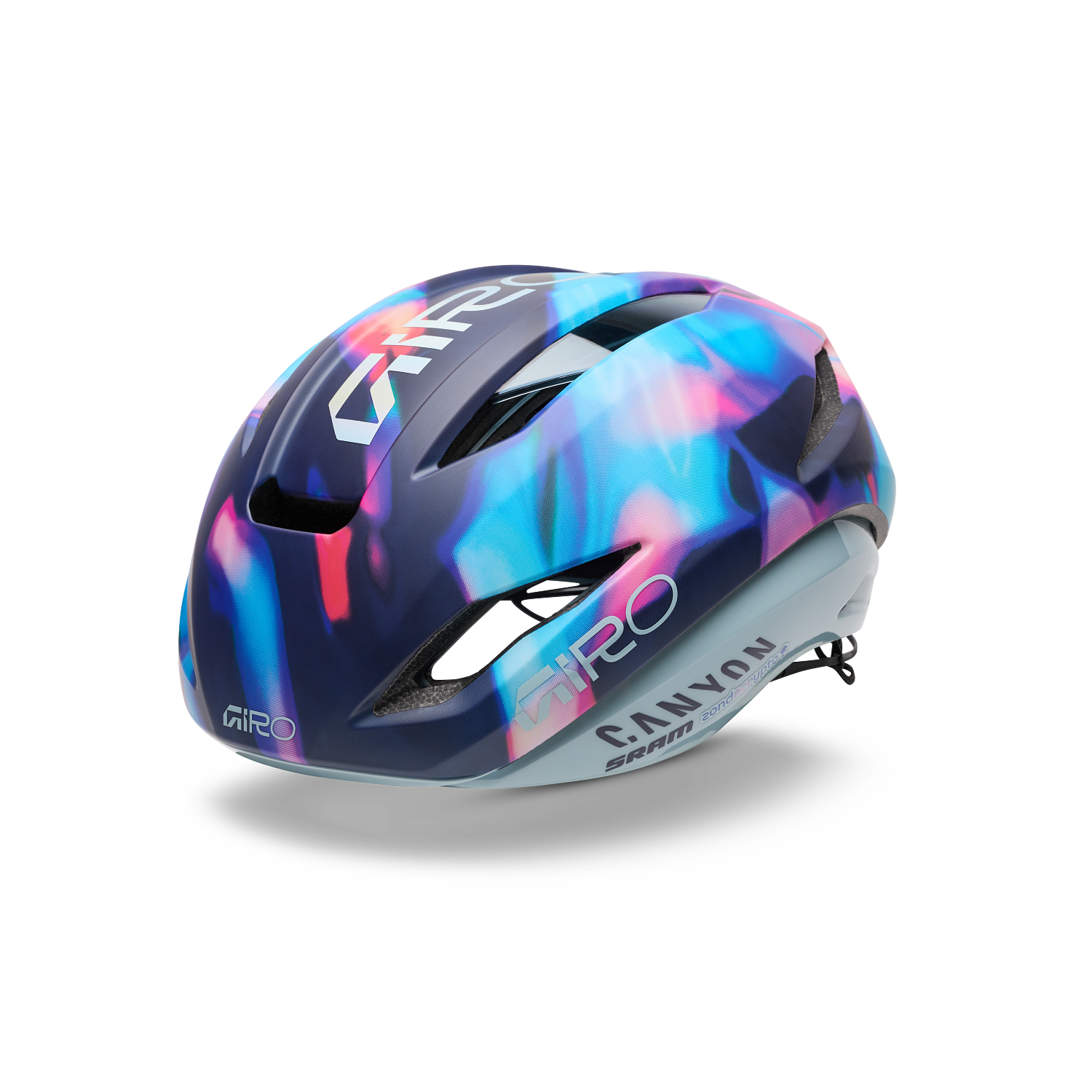
Your needs, this model
Does it fit your priorities?
What makes the Eclipse Pro different from a more open road helmet?
Giro describes an aero-focused shell, a front-center airflow path and 15 vents, and claims a 17% improvement over its earlier Eclipse. That percentage is a manufacturer comparison without a test setup in the reviewed page; it is not a promised speed gain. The design is distinct from Cielo's 22-vent road/gravel feature profile, but neither count predicts personal cooling.
Explore this need in the finder →Would a 57 cm circumference fall in the listed Medium range?
Yes. Giro's shared adult chart lists Medium as 55–59 cm, so 57 cm falls within the guide. Try the exact helmet on and check level position, strap adjustment and stability; circumference alone does not establish head shape or comfort.
Explore this need in the finder →Can I require this exact model to have documented US CPSC compliance?
The captured US product page gives 280 g as a size-M CPSC weight but does not provide an explicit compliance sentence in its certification text. The finder therefore leaves CPSC status unknown and will not match a requirement for documented compliance; verify the physical label and exact model documentation.
Explore this need in the finder →The Giro Eclipse Pro is the aero-focused road option in this group, rather than an ordinary highly vented climbing shell with a racing label. Giro says the helmet was shaped through computational fluid dynamics and wind-tunnel work, and claims it is 17% faster than the earlier Eclipse. That is a manufacturer claim about its own comparison; the page does not provide the test setup, speed range or an independent time trial that would let a shopper translate the percentage into a real-world saving. The more dependable buying distinction is the model's lower-vent, aerodynamic design and the features Giro documents alongside it.
A road-racing shape with a specific airflow layout
The US page lists 15 Wind Tunnel vents and describes a front-center opening designed to divide airflow toward the forehead and over the brow. Internal channels connect shell openings to exhaust pathways. This is a more deliberate aerodynamic compromise than Cielo Mips' published 22-vent configuration: fewer openings and a stated aero emphasis make the Eclipse Pro the model to investigate if drag-oriented design matters, while the Cielo's feature description foregrounds open ventilation for road and gravel riding. Vent counts are not a direct measure of cooling, and neither page provides a comparable cooling test. The fit you can actually achieve and the weather you ride in remain more important than treating either number as a comfort score.
Giro also specifies a DryCore brow pad with an internal silicone bead intended to redirect moisture, and an Aura II reinforcing arch. Those are described design features, not evidence that sweat will be managed the same way for every face or effort level. A vent layout can look compelling in product copy without establishing how a particular rider experiences it.
What the Spherical system means—and what it does not
The Eclipse Pro uses Giro's Spherical Technology powered by Mips. Giro describes an outer liner that can rotate around an inner liner in a ball-and-socket arrangement to help redirect impact forces in certain crashes. It also lists dual-density Progressive Layering. These are meaningful distinctions from the Agilis Mips and Syntax Mips, which use integrated Mips systems rather than Giro's Spherical construction. They are not promises that a rider will avoid concussion or injury. The CPSC's consumer guidance still centers correct model selection, fit and wearing instructions, while a mechanism name alone cannot establish an individual's protection outcome.
One evidence limit deserves special notice: Giro's US product page presents the weight as 280 g for a size Medium and elsewhere labels that figure “medium CPSC,” but the product copy captured here does not state in words that this exact configuration complies with the US CPSC bicycle-helmet standard. The finder therefore does not treat the weight label as a compliance certificate. Check the actual helmet's label and exact offer documentation before buying if US CPSC compliance is essential.
Fit adjustment and size range
The listing offers S, M and L. Giro's general bicycle size chart gives those adult sizes as 51–55 cm, 55–59 cm and 59–63 cm, respectively. A 57 cm circumference falls inside the chart's Medium interval, but that is a screening point, not a fit verdict. The manufacturer's size chart advises keeping a tape level around the head, seating the helmet low enough to cover the forehead without blocking vision, and trying it on before riding.
The Roc Loc 5.5 Air fit system adjusts retention tension and fore-aft tilt. That gives a rider ways to refine the position after choosing a shell size, but it cannot change the underlying shape or remedy pressure points. Giro does not publish a head-shape profile on the sources reviewed here, so try the specific size with the straps adjusted and confirm the helmet stays level during a gentle movement check.
Which rider should compare it—and who should not infer too much
For an adult who rides paved roads and prioritizes a more aerodynamic road shell, the Eclipse Pro has a coherent feature set: 15 vents, the described front-center flow path, Spherical/Mips, DryCore and a highly adjustable fit system. Its evidence is less decisive for someone shopping first for broad gravel or trail suitability; the page categorizes it as a road half-shell and does not explicitly document those activities. It is not a full-face or downhill helmet, and the reviewed page does not establish an e-bike-specific certification.
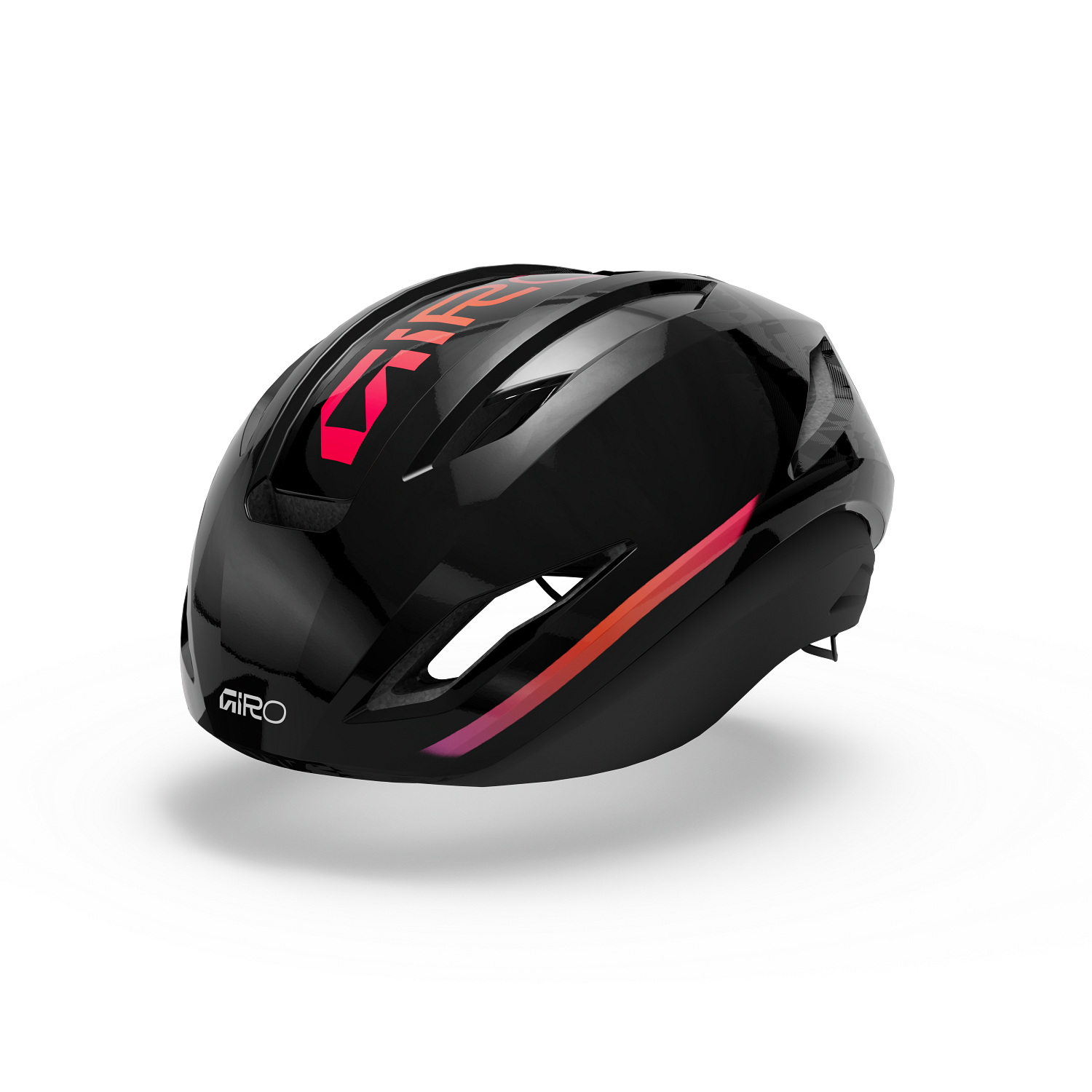
The separate Eclipse Pro Special Edition, style 100000000300000157, is the same documented Eclipse Pro design in special colorways; Giro repeats the 15-vent, Spherical and Medium-weight information. The Sunset image below belongs to that separate edition, not the standard Multi/Haze configuration shown on the model card. Both routes stay distinct in the catalogue even though this functional review covers the colorway difference.
Bottom line
The Eclipse Pro is best understood as Giro's documented aero road choice, not as a universally faster or cooler helmet. Its Spherical system and detailed ventilation architecture distinguish it from the more conventional Agilis and Syntax designs, while Cielo publishes more openings and explicit road/gravel use. Giro's 280 g Medium figure, its claimed 17% aero improvement and its technology descriptions all need to remain attributed to the manufacturer. Confirm the exact style and fit, check the helmet's own safety label, and choose a secure, comfortable fit over an unsupported promise about race speed.
Research note: this assessment is based on Giro's official US catalog and product pages and its sizing information. No helmet ownership, riding, fitting, wind-tunnel work, laboratory testing, weighing or customer experience is claimed.
Key specifications
Key details at a glance
| Helmet style | Half-shell |
|---|---|
| Listed fit sizes | S / M / L |
| Published circumference floor | 51 cm |
| Published circumference ceiling | 63 cm |
| Rotational-impact design | Spherical Technology powered by Mips |
| Fit adjuster | Roc Loc 5.5 Air |
| Fit adjustments described | retention tension / fore-aft tilt |
| Manufacturer-stated CPSC Medium weight | 280 g |
| Verified vent count | 15 vents |
| Manufacturer-stated Medium weight | 280 g |
Use the exact model’s instructions for operating limits, supplied equipment and version differences.
Sources for this review
Sources for this assessment
Compare the model with your own constraints
A model assessment cannot decide fit by itself. Use the finder to combine riding use, head circumference and documented features, then verify the exact helmet and instructions.