
Your needs, this model
Does it fit your priorities?
Is Helios a road-only helmet?
Giro's US description names road cyclists, gravel enthusiasts and adventure riders, so the reviewed arrangement is documented for road and gravel. It is a half-shell; this wording does not establish downhill or full-face use.
Explore this need in the finder →How does Helios differ from Cielo Mips?
Helios documents Spherical Technology and Progressive Layering; Cielo documents Mips Evolve Core, Roll Cage and 22 vents. Giro lists Medium weights of 270 g and 290 g respectively, but those are manufacturer figures and do not prove comparative comfort, cooling or safety.
Explore this need in the finder →Can I require a Giro Spherical design and documented CPSC compliance?
The product page documents Spherical Technology, but the captured US certification field lists CE EN 1078 and does not explicitly state CPSC compliance. The finder will reject the CPSC requirement because unknown does not satisfy an essential condition.
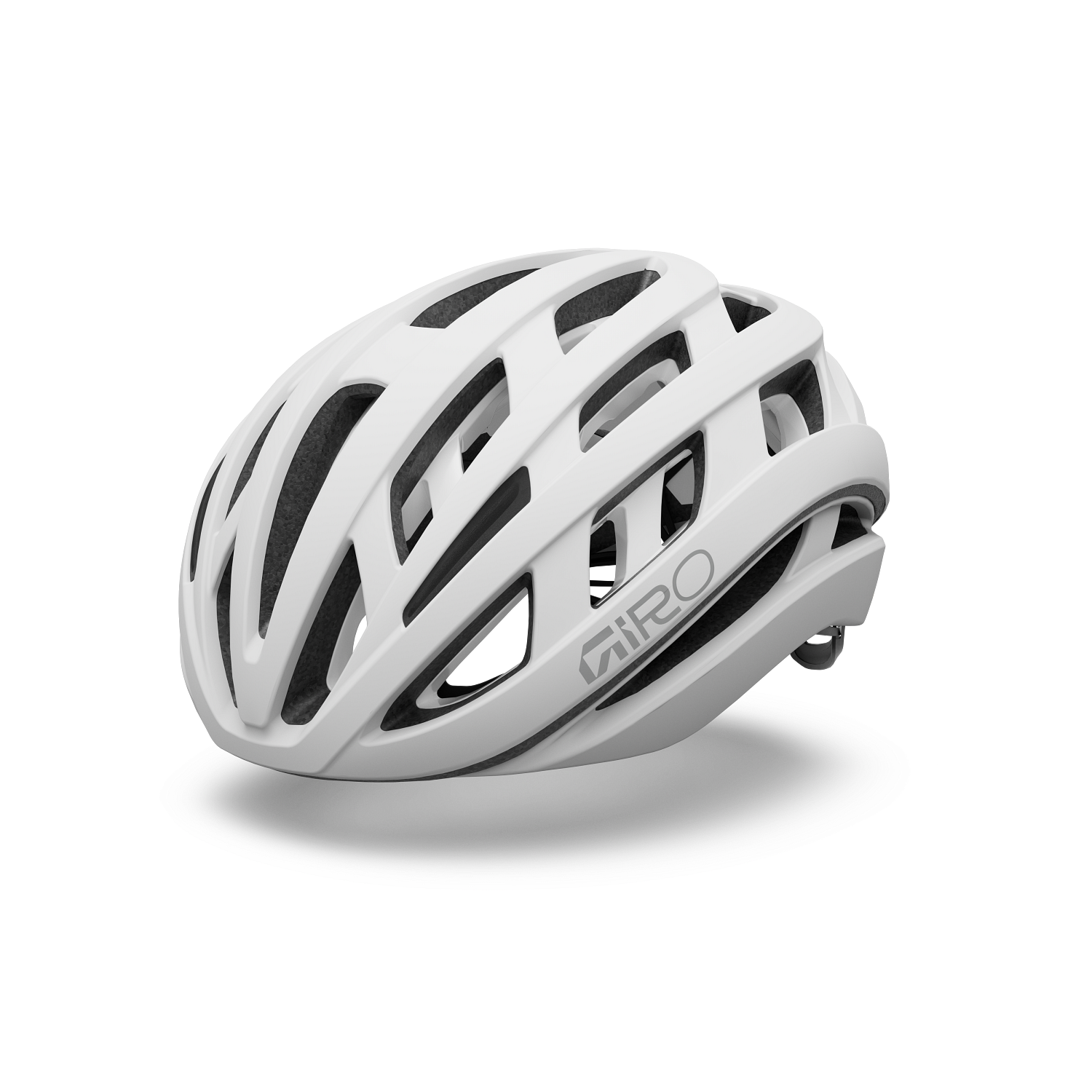
Explore this need in the finder →The Giro Helios Spherical is the clearest match in this group for someone who moves between road and gravel riding but specifically wants Giro's Spherical/Mips liner design. Giro names road cyclists, gravel enthusiasts and adventure riders in the US description, which is more explicit than the road-only page for Eclipse Pro and the broad “all roads” wording for Agilis. Its fit-size range is S, M and L; its published Medium weight is 270 g. Those details help define a candidate, but they do not settle fit or make the model interchangeable with a trail or full-face helmet.
Spherical technology is the main functional distinction
Giro describes Spherical Technology as a ball-and-socket design powered by Mips, with an outer liner that may rotate around an inner liner during a crash. The Helios page also names Progressive Layering with two EPS densities. These are manufacturer descriptions of an engineering approach, not a guarantee of protection for a particular person or crash. The Helios belongs in a different feature category from Giro models with integrated Mips such as Agilis, Syntax and Cielo. A shopper who specifically requires the Spherical system should check the exact model name rather than treating all Mips helmets as equivalent.
The fit system is Roc Loc 5 Air. Giro says it adjusts fit tension and fore-aft tilt, and that its suspension design leaves room for airflow above the scalp. The page also describes Ionic+ padding and Wind Tunnel internal channels working with large vents. It does not give a numeric vent count for this model, so this assessment does not use one. “Massive vents” and “remarkable cooling” remain marketing language, not a comparable temperature or airflow test.
Fit range and size-specific weight
The US page lists S, M and L. Giro's general adult bicycle chart assigns those sizes to head circumferences of 51–55 cm, 55–59 cm and 59–63 cm. A 57 cm measurement falls within the chart's Medium interval, but an overlapping boundary or a chart match cannot determine a rider's head shape, pressure points or preferred stability. Use a level tape and then try on the actual helmet using Giro's positioning directions. The fit dial can adjust tension and tilt; it cannot change the basic shell shape.
Giro lists 270 g for size Medium and identifies CE EN 1078 in its certification field. The US page captured here does not state US CPSC compliance in its certification information, so the product is not matched to a “require documented CPSC” answer. If that is essential, verify the physical helmet's label and exact US documentation directly. The published weight belongs to one size; do not assume every size or colorway weighs the same.
Helios beside the Cielo
The Helios and Cielo both have explicit road-and-gravel language and S/M/L size lists, but the functional descriptions differ. Helios centers on Spherical Technology and Progressive Layering, while Cielo specifies Mips Evolve Core, Roll Cage reinforcement and 22 Wind Tunnel vents. Giro lists Cielo's Medium at 290 g versus 270 g for Helios; those are manufacturer-stated figures for Medium, not measurements made here. The vent-count difference does not by itself prove that Cielo is cooler, nor does the system name establish which product fits better. Choose among them by the feature you truly need and by a correct try-on.
Giro's page categorizes the Helios as a cycling helmet and road/gravel/adventure product. It does not establish it for downhill, full-face or a higher e-bike certification in the reviewed US copy. A mountain trail rider should not infer suitability merely from “adventure.” If that use is essential, seek a model page that clearly specifies the activity and exact configuration.
What the source evidence cannot tell us
No head-shape profile, independent size-by-size fit comparison, exact vent count or Helios-specific external laboratory rating was established from the sources used for this review. Giro's size chart expressly treats its circumference rows as a guide and recommends trying the helmet on. The CPSC consumer guide likewise emphasizes correct fit and following the helmet's own instructions. These references support a careful buying process, not a model-specific test result.
Bottom line
Helios Spherical is a plausible candidate for adult road and gravel riders who want the documented Spherical/Mips design, adjustable Roc Loc 5 Air and three charted sizes. The 270 g Medium figure and two-layer EPS feature are concrete comparison points, but its exact vent count, head-shape suitability and US CPSC statement are not established by the reviewed US copy. Verify fit and the exact label before choosing an offer; don't turn a circumference match or a branded impact system into a promise about safety.
Research note: this is a source-based assessment of Giro's US product page, Giro's sizing chart and general helmet guidance. No ownership, riding, fitting, testing, weighing or customer experience is claimed.
Key specifications
Key details at a glance
| Helmet style | Half-shell |
|---|---|
| Listed fit sizes | S / M / L |
| Published circumference floor | 51 cm |
| Published circumference ceiling | 63 cm |
| Rotational-impact design | Spherical Technology powered by Mips |
| Fit adjuster | Roc Loc 5 Air |
| Fit adjustments described | fit tension / fore-aft tilt |
| Manufacturer-stated Medium weight | 270 g |
Use the exact model’s instructions for operating limits, supplied equipment and version differences.
Sources for this review
Sources for this assessment
Compare the model with your own constraints
A model assessment cannot decide fit by itself. Use the finder to combine riding use, head circumference and documented features, then verify the exact helmet and instructions.