
Your needs, this model
Does it fit your priorities?
Does the exact Mode page support an urban ride with documented US CPSC compliance?
Yes. Specialized describes Mode for city riding and states US CPSC compliance for persons age five and older. It also lists the separate Dutch NTA 8776 e-bike standard; one standard should not be substituted for the other, and neither is a fit or crash-outcome guarantee.
Explore this need in the finder →Can the finder verify Mode for a 57 cm measurement?
No numeric result is established in the captured evidence. The product page offers S/M/L and Classic/Round Fit choices, but the exact US capture and linked size-guides landing provide no circumference endpoints. Check a current exact-model chart and try the selected fit on rather than converting labels to centimeters.
Explore this need in the finder →Does Mode meet a Spherical/Mips must-have?
Not on the evidence captured. The Mode page says MIPS but does not identify Spherical Technology powered by Mips, so the narrower Spherical/Mips requirement remains unmet even though the product has an Mips label.
Explore this need in the finder →This assessment covers the Matte Black US route for Specialized Mode, product family 1000208081. The manufacturer places Mode in its commuter range and describes it for city riding. The product page lists S, M and L, two headforms, an integrated fit adjuster and a US CPSC statement. It also separately names Dutch e-bike standard NTA 8776. Those are product-page facts, not an in-person fitting, ownership account or impact test.
A city-first half-shell with a different fit choice
Mode's strongest identity is its commuter focus. Specialized describes hidden vents integrated into a smooth exterior, an occipital-base adjustment and reflective decals. It also says the helmet is compatible with its Stix light. Compatibility does not mean a lamp is included, and passive reflective decals are not a measurement of active-light visibility. The manufacturer does not publish a vent count or a weight on the captured page, so neither is inferred here. The cooling language is design description, not a result measured by this review.
The fit options deserve more attention than the urban styling. The exact US page lists a Classic SBC headform and a Round Fit headform, and describes the latter as wider for riders with rounder heads. It also lists S/M/L and three shell sizes. The evidence does not say that one headform will suit a particular rider, and the size display does not provide a circumference chart. The captured product page and its linked size-guide landing did not expose numeric endpoints. That leaves Mode out of a request such as 57 cm in this finder; it is an evidence gap, not proof that a matching current chart does not exist. Check the exact model's latest chart and try the chosen headform on.
Two standards statements, not a universal safety promise
Specialized states that Mode helmets sold in the US and Canada comply with the US CPSC bicycle-helmet standard for persons age five and older. The same page separately says Mode passes Dutch NTA 8776, a named e-bike helmet standard. Those statements have distinct scopes. The CPSC wording supports the standard filter in this review; NTA 8776 is useful for a shopper comparing e-bike-specific claims. Neither one guarantees protection in every crash, verifies the authenticity or history of a seller's unit, or establishes fit. Check the physical helmet's label and instructions.
The listing also says MIPS, but does not identify Spherical Technology powered by Mips. That is why Mode does not appear when the finder specifically requires Spherical/Mips. A general Mips label and a named system architecture should not be treated as the same fact. If that design is a must-have, compare a documented Spherical model instead of assuming the names are interchangeable.
How it compares with other commuter options
Mode belongs in a practical comparison with the Specialized Align II and Specialized Tone, both of which also have exact-page CPSC wording and Mips labels. Mode differs by explicitly offering the two headforms and by stating NTA 8776. Align II and Tone have their own size labels and fit mechanisms, but their saved US pages also fail to provide circumference endpoints. A letter-size selection on any of these pages is not a way to infer which helmet will fit a measured head.
The Chamonix 3 is another urban-capable Specialized model, but its exact page supports road and gravel use as well as commuting. Mode's captured product purpose is narrower and more city-oriented. This is a difference in documented use, not a ranking of comfort or protection. The library therefore gives Mode the urban tag without adding road, gravel or trail by association with other helmets.
What the dated listing does—and does not—settle
The exact product page capture displayed a final-sale notice stating that the item was not eligible for return or exchange. That is a dated seller-page condition, not a dependable statement about every later offer. Anyone considering a particular listing should verify the exact color, size, selected headform and current return terms before ordering. This matters especially where an in-person fit check is unavailable. Do not assume that another seller's policies or a different Mode color route carries the same terms.
Specialized's US safety-notices page was checked on the same date and did not list Mode. That is a limited page-level screen; it does not check an individual helmet's history or substitute for reviewing current notices at purchase time. A used helmet needs its own condition and impact-history questions regardless of how clean the exterior looks.
Who should keep Mode in the shortlist?
Mode is worth comparing for a rider seeking a city-category half-shell who values a choice between Classic SBC and Round Fit headforms, occipital adjustment, reflective decals, Stix-light compatibility and distinct CPSC and NTA 8776 statements. The unresolved items are meaningful: there is no captured circumference interval, no specific Spherical/Mips label, no included-light claim and no independently verified airflow result. The finder link for urban use with CPSC documented preserves those conditions while returning the full eligible set.
Before riding, confirm the precise US Mode version and size, consult current Specialized fitting instructions and check that the helmet sits level and secure. Verify the actual standard label, any accessory included with the offer, current seller return terms and the condition of a used unit. A named headform, adjustment dial, size label or product image is a reason to investigate, not a personal-fit verdict.
Sources: Specialized Mode, Matte Black US product page; Specialized US size guides; Specialized US safety notices. Compare the independent assessments of Align II, Tone and Chamonix 3.
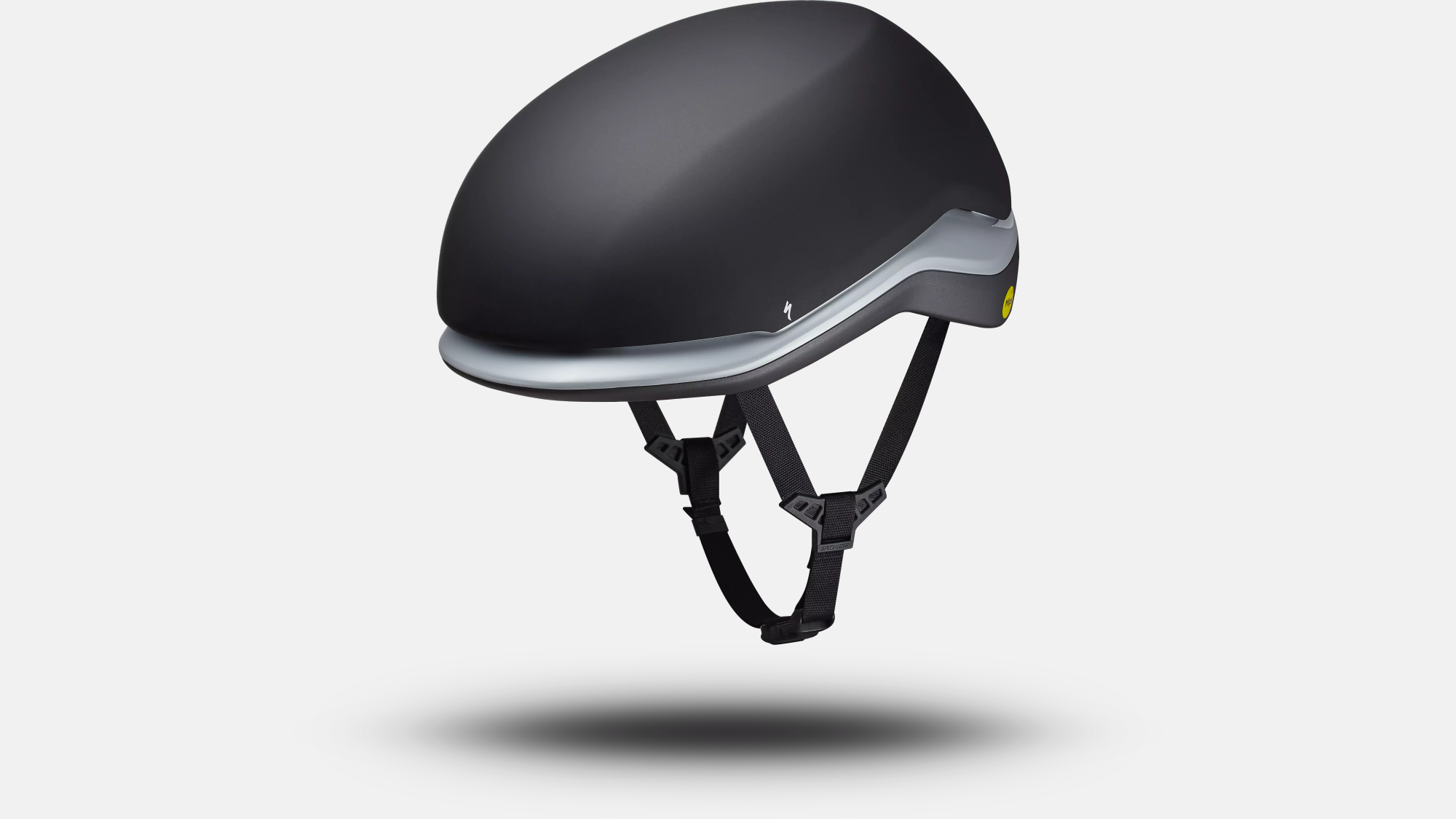
Key specifications
Key details at a glance
| Helmet style | Half-shell |
|---|---|
| Listed fit sizes | S / M / L |
| US CPSC compliance stated | Yes |
| Rotational-impact design | Mips; named architecture unspecified |
| Fit adjuster | Integrated fit adjustment with occipital-base adjustment; two headform options. |
| Fit adjustments described | occipital-base adjustment / Classic SBC headform option / Round Fit headform option; manufacturer describes it as wider for rounder heads |
Use the exact model’s instructions for operating limits, supplied equipment and version differences.
Sources for this review
Sources for this assessment
Compare the model with your own constraints
A model assessment cannot decide fit by itself. Use the finder to combine riding use, head circumference and documented features, then verify the exact helmet and instructions.