
Your needs, this model
Does it fit your priorities?
Which daily use does the exact Tone page describe?
Specialized describes Tone for commuting and everyday cruising and places it in its commuter-helmet category. The page does not establish a trail, road-racing or child-specific plan.
Explore this need in the finder →Does the Tone page establish CPSC compliance and a Spherical/Mips system?
The US/Canada page states CPSC compliance for people age five and older and lists MIPS. It does not name Spherical Technology powered by Mips, so it does not satisfy the finder's narrower Spherical requirement.
Explore this need in the finder →Can a circumference number be screened against this Tone page?
The saved US page lists S, M and L but does not supply the exact centimeter endpoints. Treat that numeric field as unknown in this assessment, check the current exact-model size chart and try the helmet on rather than assuming that its three shell sizes fit a particular measurement.
Explore this need in the finder →How does Tone's independent lab record differ from Align II's?
Virginia Tech's published 2026 records list Tone at three stars with a 13.047 score and Align II at five stars with a 9.554 score. The lab says lower scores indicate better performance under its protocol; these comparative test results do not guarantee an individual crash outcome or replace CPSC labeling.
Explore this need in the finder →The Specialized Tone reviewed here is the Birch/Taupe US configuration. Specialized places it in its commuter category and describes it for commuting and everyday cruising. Its exact page lists a Classic fit in S, M and L, Headset SX adjustment, adjustable Tri-Fix web splitters, MIPS, reflective decals and three shell sizes. The page also states US CPSC compliance for people age five and older. This is a product-page assessment with an independent lab-data comparison, not an in-person fit, ownership account or impact test.
What is documented for everyday use
The manufacturer describes Tone as a commuter helmet for commuting and everyday cruising. That supports the urban plan in this finder, but the evidence reviewed here does not establish an explicit trail, road-racing or child-use plan. The combination of a stated commuter purpose and reflective decals is relevant to everyday-use research, yet passive reflectivity is not an active lamp and the page does not quantify visibility distance. Specialized describes internal channeling as promoting airflow; that claim is not an independent ventilation result. These details help define what the product page says without promising how it will feel or perform for a particular rider.
The exact page offers S, M and L and says the fit uses three shell sizes in a Classic SBC headform. It does not provide a verified circumference interval in the captured US evidence. A model name, shell count or letter-size choice cannot be converted into centimeters without a supporting chart, so the numeric field remains unknown here. Consult the live exact-model sizing information and physically try the selected size. A chart match would still only be a screening aid; the helmet has to sit level, feel comfortable and remain secure with its retention system adjusted under the maker's instructions.
Standards and MIPS are not interchangeable evidence
Specialized states that Tone helmets sold in the US and Canada meet the US CPSC bicycle-helmet standard for people age five and older. This model-specific statement supports the CPSC option in the reviewer's evidence set. It is not proof that an individual offer is authentic, intact or appropriately sized. Check the exact helmet's identification and physical label, and review current notices and the helmet's history, particularly when buying used.
The page also says MIPS, but the captured wording does not identify Spherical Technology powered by Mips. Tone therefore does not pass the finder's narrower Spherical/Mips requirement. The distinction reflects what the manufacturer page names; it is not a comparative claim about injury outcomes. A standards statement, a rotational-system label and the fit of the finished helmet answer different questions, and none is a blanket guarantee against injury.
Independent laboratory context
Virginia Tech's bicycle helmet data lists Tone at three stars with a score of 13.047. Its published result is a model-level laboratory comparison, not a guarantee of what happens in a crash or evidence that a helmet fits an individual. In the same dataset, Align II is listed at five stars and 9.554. Under Virginia Tech's protocol, lower scores correspond to better performance in the tests. That makes the recorded result a meaningful difference to weigh, while still leaving fit, the intended use, exact model identity and personal preferences unresolved.
The lab score does not undo the CPSC statement or establish that Tone fails a consumer-product standard. Conversely, CPSC wording does not tell a shopper which model had the lower lab score. Treat the two sources as distinct: Specialized supports Tone's commuter purpose, size labels, adjustment features and standards statement; Virginia Tech supplies its protocol-specific comparative rating. Neither source reports this reviewer's hands-on experience, and this review does not infer price, stock or customer satisfaction from the pages.
Tone alongside Align II
Tone and Align II occupy overlapping urban-use territory in the reviewed evidence, but they are not interchangeable. Tone's page describes everyday cruising, lists S/M/L and three shell sizes, and specifies adjustable Tri-Fix web splitters. Align II lists S/M, M/L and XL, a Headset SX dial system and a five-star Virginia Tech result. Tone's data entry is three stars. Both pages state CPSC compliance for age five and older and name MIPS without the specific Spherical wording. The different size labels do not reveal which will fit a particular head; try both if both remain candidates, and follow the exact instructions.
Who should keep Tone in the comparison?
Tone is worth checking for a shopper prioritizing a manufacturer-described commuter helmet, three shell sizes, an adjustable strap splitter, passive reflective decals and exact-page CPSC wording. It remains an unknown for a measured head circumference in this saved evidence and does not meet the named Spherical/Mips filter. The Virginia Tech result is relevant context, but some shoppers may choose to compare other documented test outcomes before trying a model.
Before purchase, confirm the offer is the Birch/Taupe US Tone, verify the exact size against Specialized's current model chart, inspect its CPSC label and try it on. Confirm that the dial and straps can be adjusted as the instructions require, and check the seller's return policy if another size may be needed. For a used helmet, ask about impact history and inspect it carefully rather than relying on appearance alone; consult current Specialized and CPSC notices. This checklist keeps the evidence useful without turning a star rating, size label or product photo into a fit verdict.
Sources: Specialized Tone, Birch/Taupe US product page; Specialized Align II product page; Virginia Tech Helmet Lab bicycle rating dataset; Specialized helmet owner's manual.
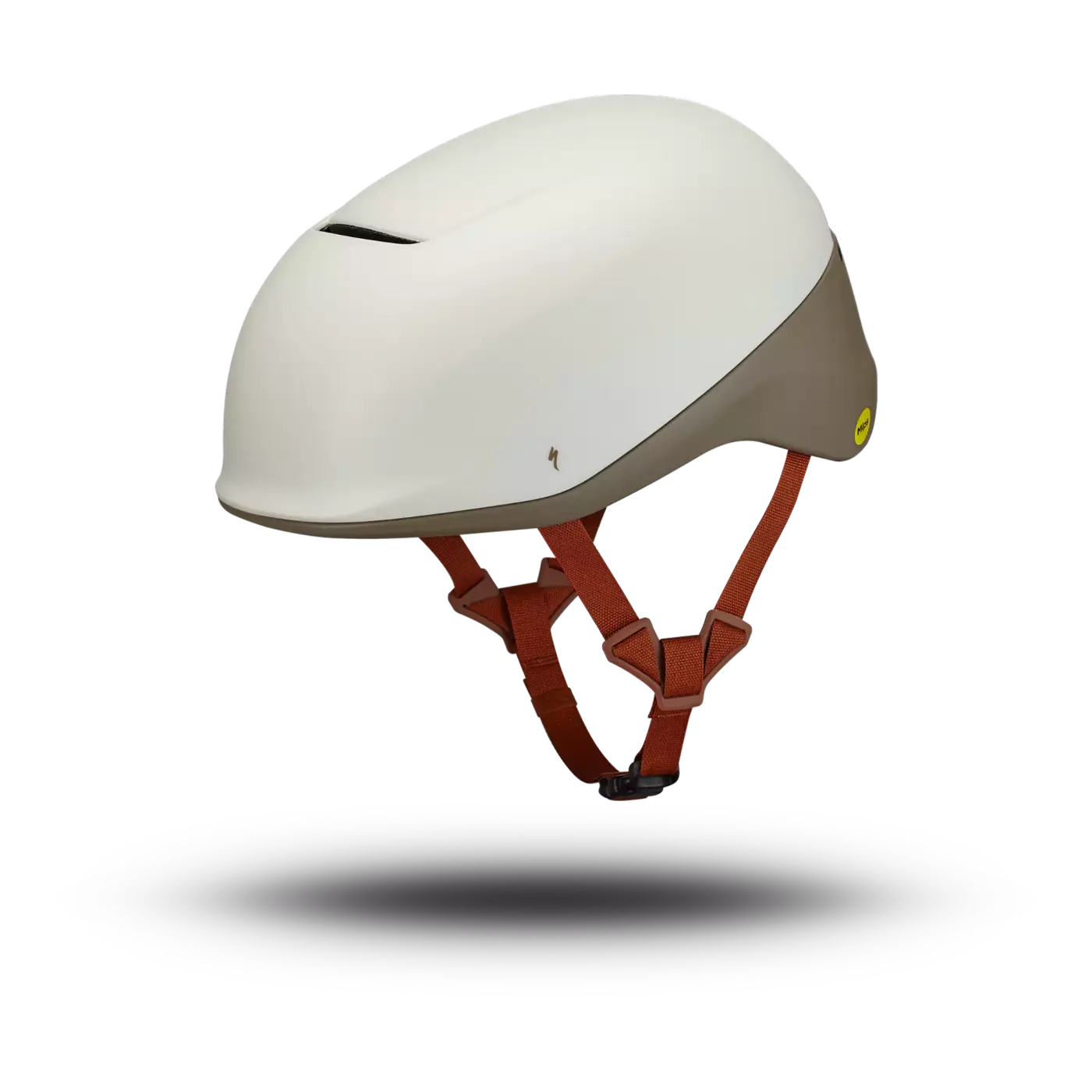
Key specifications
Key details at a glance
| Helmet style | Half-shell |
|---|---|
| Listed fit sizes | S / M / L |
| US CPSC compliance stated | Yes |
| Rotational-impact design | Mips; named architecture unspecified |
| Fit adjuster | Headset SX |
| Fit adjustments described | Headset SX fit system / adjustable Tri-Fix web splitters |
Use the exact model’s instructions for operating limits, supplied equipment and version differences.
Sources for this review
Sources for this assessment
Compare the model with your own constraints
A model assessment cannot decide fit by itself. Use the finder to combine riding use, head circumference and documented features, then verify the exact helmet and instructions.