
Your needs, this model
Does it fit your priorities?
What distinguishes Manifest Spherical from a road half-shell?
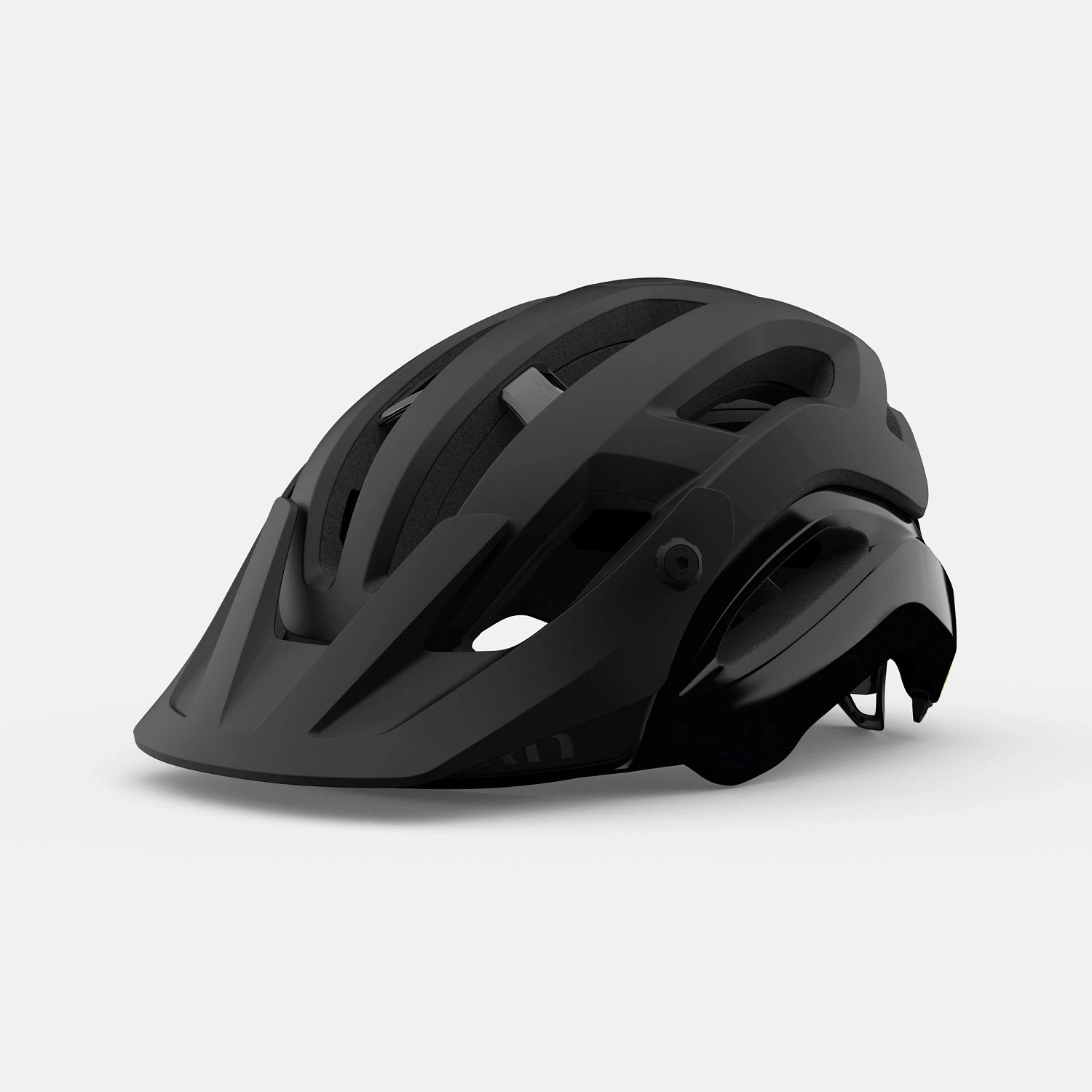
Giro describes the Manifest as a trail-riding helmet and lists a moto-style adjustable visor, a rear goggle gripper, eyewear grippers, a Fidlock magnetic buckle and the Roc Loc Trail Air fit system. These features support considering it for a trail setup; they are not a personal fit or protection verdict.
Explore this need in the finder →What does the exact current Manifest page say about the US CPSC standard?
The current style 097 page lists CE EN 1078 and does not state US CPSC compliance. Virginia Tech's historical rating data lists CPSC for a 2020-tested Manifest Spherical, but that record does not identify this exact current style. The finder therefore leaves the exact-version CPSC field unknown; check the actual helmet's label and documents.
Explore this need in the finder →What circumference and weight figures are documented?
The exact page lists S, M and L; Giro's shared bicycle chart maps those adult sizes to 51–55, 55–59 and 59–63 cm. Giro also gives 340 g for size M. Those are a general size-chart screen and a manufacturer-stated weight, not a measurement or fit test.
Explore this need in the finder →Giro’s Manifest Spherical is a trail-focused half-shell, not a full-face helmet. Its case rests on a combination of extended rear coverage, a visor with several positions, Spherical Technology powered by Mips and an adjustable Roc Loc Trail Air fit system. The product page also gives a 340 g size-M weight and a short S/M/L range. This is a source-based assessment of the exact US style 100000000500000097, not a riding or fitting test.
A trail half-shell with more than a visor
The “Manifest” name does not describe every capability by itself, so confirm the style number and the shell in the offer. Giro identifies this product as a trail-riding helmet and describes an AURA reinforcing arch, deep rear coverage, an adjustable moto-style screw-in visor and a rear goggle gripper. The visor has three riding positions plus a raised position for storing goggles above the brow. Separate integrated eyewear grippers are also listed. These are useful distinctions if your trail eyewear and visor need to work together, but the page does not claim that goggles are supplied in the box.
The page also lists a Fidlock magnetic buckle and Roc Loc Trail Air, which Giro describes as micro-adjustable. Those details identify the hardware, not whether it suits a particular head; try the exact size and check stability using the instructions.
Coverage, design and the evidence behind the label
Giro describes Spherical Technology powered by Mips as a ball-and-socket arrangement that allows the outer liner to rotate around the inner liner during some impacts. The product page also describes two-density EPS Progressive Layering. These are design and construction descriptions. They should not be read as a guarantee against concussion or as an individual crash outcome.
The current exact US style page lists CE EN 1078 and a 340 g weight for size M, but it does not state CPSC compliance. The Virginia Tech record for a “Manifest Spherical” lists CPSC for a 2020-tested model and gives four stars with a STAR score of 12.204. Virginia Tech explains that its bicycle method uses 24 lab impacts and that lower scores indicate better performance within that method. This is useful independent context for the tested model record, not proof that the exact current style, color and size have the same certification or lab outcome. The finder therefore leaves current style 097’s CPSC status unknown. Check the marking on the physical helmet if a US standard is essential.
Giro’s recall page checked here names Merit, not Manifest. This dated check does not rule out future notices or establish a used unit’s history; review current notices and inspect the exact helmet.
What Giro’s size chart can—and cannot—screen
The exact product page lists S, M and L. Giro’s shared adult bicycle chart assigns 51–55 cm to S, 55–59 cm to M and 59–63 cm to L. The outer range therefore spans 51–63 cm, with printed endpoints that overlap between adjacent sizes. The chart itself says it is only a guide and recommends a try-on before riding. A tape measurement does not describe head shape, pressure points, comfort or whether this deeper shell sits correctly on an individual.
Use the circumference as a first screening step, then try on the exact size with the retention system set up according to the manual. Check that the helmet sits level, covers the forehead as intended and stays stable when you move; confirm that the visor clears your normal eyewear and that your preferred goggle setup can be secured without altering the shell. If you are between chart bands, test adjacent sizes rather than treating an overlap as an automatic answer.
Giro gives 340 g for size M. That is a manufacturer-stated figure, not a weight measured for this review. It is 70 g above the 270 g size-M figure on Giro’s road-oriented Eclipse Spherical page, but the helmets have different stated uses and shell configurations. The arithmetic is not a comfort or suitability score. No numeric vent count is provided on the exact Manifest page; Giro describes large Wind Tunnel vents and an AURA arch but does not publish an airflow measurement here.
How it differs from other trail options
Compare Manifest as a half-shell with the Montaro Pro or Tyrant Spherical; their pages describe different equipment and standards evidence. If a chinbar is central, the Coalition Spherical style 027S is a distinct full-face MTB option with an exact-page CPSC statement, not a like-for-like shell.
Manifest’s current page does not give Coalition’s explicit CPSC wording, a head-shape profile or a measured heat result. Confirm whether a half-shell or full-face format suits the intended trail activity before comparing sizes.
Check the exact offer before choosing
Confirm style 100000000500000097, the size, color, visor and buckle shown in the seller’s listing. Do not assume a photo includes goggles, a replacement visor or other add-ons. Ask for the physical US label and product documentation if CPSC evidence matters; the current page’s CE EN 1078 listing is not a substitute for that check. Review return terms before trying a helmet at home, and avoid treating a new-looking used shell as proof that it has never been impacted.
Manifest Spherical is a well-documented trail option to investigate when an adjustable visor, goggle retention, deeper half-shell coverage and Spherical/Mips design all matter. The 51–63 cm chart span narrows the size search, while the 340 g Medium figure, absent current-page CPSC statement and lack of an individual fit profile keep the final decision dependent on the exact unit, its label and a careful try-on.
Key specifications
Key details at a glance
| Helmet style | Half-shell |
|---|---|
| Listed fit sizes | S / M / L |
| Published circumference floor | 51 cm |
| Published circumference ceiling | 63 cm |
| Rotational-impact design | Spherical Technology powered by Mips |
| Fit adjuster | Roc Loc Trail Air |
| Fit adjustments described | micro-adjustable fit adjustment / positioning adjustments |
| Manufacturer-stated Medium weight | 340 g |
Use the exact model’s instructions for operating limits, supplied equipment and version differences.
Sources for this review
Sources for this assessment
- Giro Manifest Spherical Helmet — exact US style 100000000500000097, Matte Black page
- Giro US cycling helmets directory, 66-result page 2 observation
- Giro US bicycle helmet size chart
- Giro US recall notices checked for observed style 097
- Virginia Tech Helmet Lab — 2026 bicycle rating methodology and tested-model table
- Virginia Tech Helmet Lab — bicycleData.js rating record for Manifest Spherical
- CPSC — Which Helmet for Which Activity?
Compare the model with your own constraints
A model assessment cannot decide fit by itself. Use the finder to combine riding use, head circumference and documented features, then verify the exact helmet and instructions.