
Your needs, this model
Does it fit your priorities?
How is Coalition Spherical different from the reviewed trail half-shells?
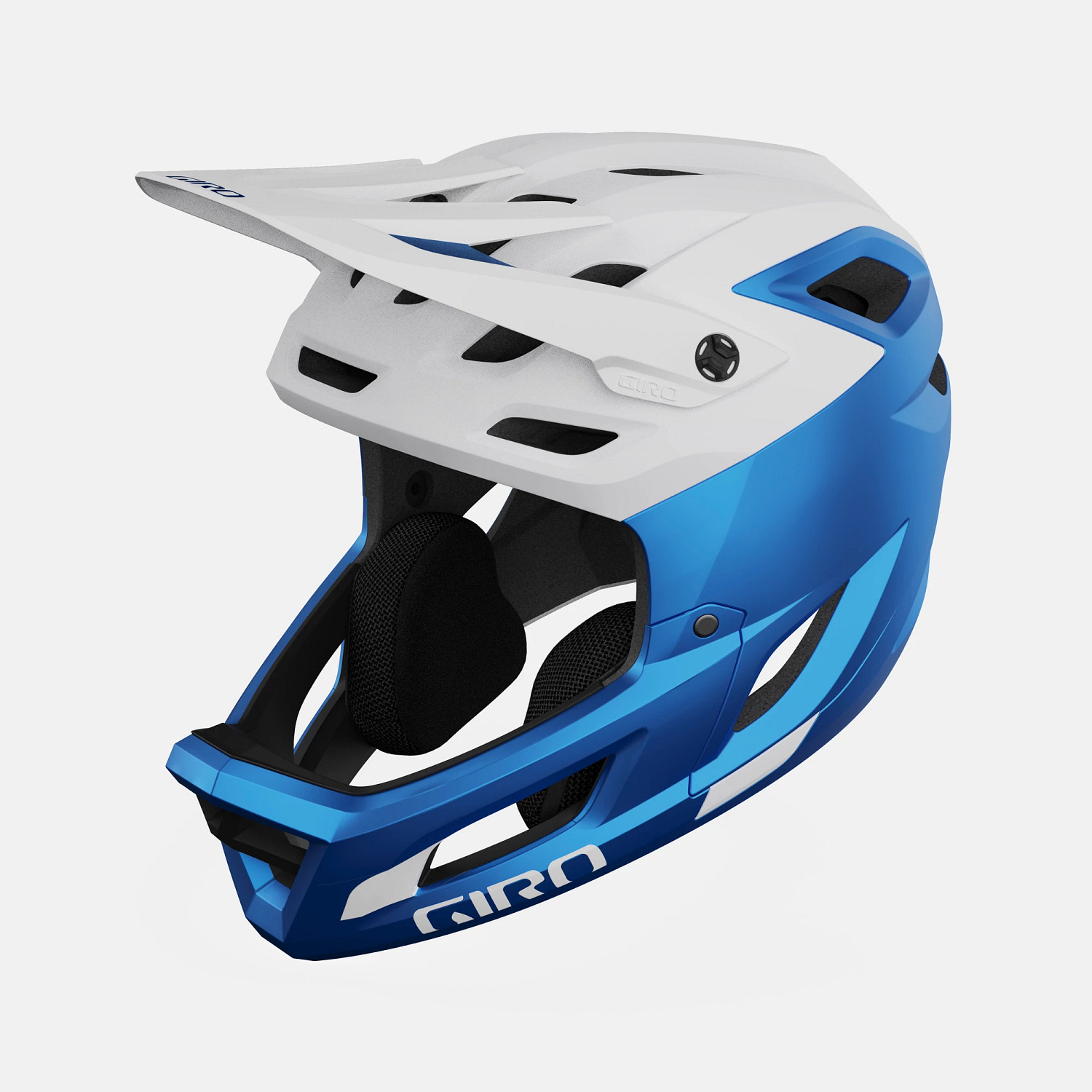
Giro describes Coalition as a full-face MTB helmet with an integrated Halo chinbar, two removable cheek-pad sets and Spherical Technology powered by Mips. That is a different coverage format from the reviewed half-shells; it is not a personal recommendation or a claim that one form is right for every trail.
Explore this need in the finder →Does the exact US style 027S page state CPSC compliance?
Yes. The exact Coalition Spherical style 027S page states compliance with the US CPSC bicycle-helmet standard for persons age five and older. Check the actual product label and instructions for the exact unit; a web statement does not prove fit or guarantee protection.
Explore this need in the finder →What circumference does Giro's listed size run cover?
The page lists S, M and L, which align with Giro's 51–55, 55–59 and 59–63 cm adult chart intervals. Those chart bands overlap at their endpoints and do not choose a size for you; verify the exact version, follow the fit instructions and try it on before riding.
Explore this need in the finder →Giro's Coalition Spherical is the most distinct trail format in this checkpoint's reviewed set: the exact US style 027S is a full-face MTB helmet with an integrated chinbar, rather than a half-shell with an extended rear. The product page supports a narrow but useful conclusion: a rider comparing full-face coverage, a stated US CPSC standard and Spherical Technology powered by Mips can include this exact version in a try-on shortlist. It does not establish that the helmet suits a particular face shape, riding intensity or crash scenario. This is a source-based assessment, not a riding test.
Start with the format, not the name
Giro's page identifies an MTB helmet and describes the Halo System chinbar as part of the Coalition's structure. The chinbar uses Pebax and elastomeric bushings integrated with the helmet's foam, according to the manufacturer. Two removable cheek-pad sets and an emergency directional snap system are also described. These details distinguish Coalition from trail half-shells without quantifying impact protection; they do not resolve fit.
Decide whether the chinbar and fuller shell suit the use case, then whether the exact size can be fitted securely. A half-shell may better suit a rider who does not need full-face coverage; full-face contact points and field of view can differ. Giro does not publish a head-shape fit profile, so its size chart is only a first screen.
Spherical is a design description, not a result guarantee
The page describes Spherical Technology powered by Mips as an outer liner that can rotate around an inner liner, and it describes progressive EPP and EPS layers. It also says the Halo system combines a chinbar with compliant components intended to manage force. Those are relevant engineering distinctions for shoppers comparing labels. They are not independent outcome data, and this assessment does not translate them into a claim that Coalition prevents a particular injury. The page's claim about exceeding a chinbar deflection test is not accompanied by a named protocol or a linked report, so it is not treated as a comparative result here.
Giro also calls the helmet NTA-certified, but the captured US page does not identify a particular NTA version or provide a certificate. That wording is worth checking against the exact helmet and any documentation if it matters to the rider's use. It should not be used as a substitute for the explicit US CPSC statement on style 027S.
What the size page does and does not tell you
The exact product page lists S, M and L. Giro's accompanying bicycle chart associates those sizes with 51–55, 55–59 and 59–63 cm circumference bands. These adjacent intervals overlap at the printed endpoints; a measurement that sits on a boundary does not tell you which shell or cheek-pad combination will fit. The page does not publish a head-shape profile or a fit-dial adjustment description. Two sets of removable cheek pads are documented, but that is not the same as a universal fit adjustment.
Measure level around the head, use the chart to identify plausible sizes, then try on the exact version according to Giro's instructions. Check that the helmet sits correctly, the retention system works for you, and the cheek pads do not create uncomfortable pressure. If the fit depends on a size or pad combination not confirmed by the seller, ask before purchasing; do not infer a package from a color photograph.
Weight and cooling need careful reading
Giro gives 800 g in the descriptive text for M/L and also gives 800 g in the certification line for size Medium CPSC. The number matches, but the size basis does not. The fact record therefore preserves the stated figure with that inconsistency rather than presenting it as a clean, independently measured Medium weight. If weight is central to your decision, confirm the size-specific number for the exact version and consider weighing the actual unit rather than treating the web copy as a measurement.
The manufacturer describes large front intakes, rear exhaust vents and internal channels, as well as a DryCore brow pad. It does not provide a numeric vent count or a measured cooling result. The page also lists Ionic+ padding, a Fidlock magnetic buckle and tool-free breakaway visor bolts. These are documented features, not a substitute for trying on the shell and inspecting how its hardware works for your routine.
US compliance is explicit for this style
Unlike the separately observed non-S style 027 page, the exact style 027S page states compliance with the US CPSC Safety Standard for Bicycle Helmet for Persons Age 5 and Older. That is the basis for including this configuration in a CPSC-filtered shortlist. Look for the compliance information on the actual helmet and verify the exact style, size and instructions. A catalog statement is not proof that a particular used or replacement unit is undamaged, and compliance does not promise an injury-free ride.
Giro's recall page checked for this assessment lists the Merit helmet recall and does not name Coalition. That is a dated page check only; it cannot rule out future notices or establish the history of an individual helmet.
Before choosing an offer
Confirm that the listing is style 100000001500000027S, not the similar non-S style 027, and that the color, size, CPSC wording and full-face chinbar match the page you reviewed. Ask which cheek pads and charging or care materials are actually in the package; do not assume a seller's photograph documents every included component. Check the return terms before trying the helmet at home, and inspect the condition, label and manufacturing information on any used or open-box unit.
Coalition Spherical is most useful to compare when the full-face MTB format itself is a requirement. Its combination of chinbar, Spherical/Mips design and an exact-page CPSC statement makes it materially different from the many half-shell candidates, while the 51–63 cm range, size-basis conflict and lack of individual fit evidence keep a try-on essential. Treat the features as a shortlist filter, not a personal fit or protection promise.
Key specifications
Key details at a glance
| Helmet style | Full-face MTB helmet |
|---|---|
| Listed fit sizes | S / M / L |
| Published circumference floor | 51 cm |
| Published circumference ceiling | 63 cm |
| US CPSC compliance stated | Yes |
| Rotational-impact design | Spherical Technology powered by Mips |
| Fit adjustments described | |
| Manufacturer-stated CPSC Medium weight | 800 g |
Use the exact model’s instructions for operating limits, supplied equipment and version differences.
Sources for this review
Sources for this assessment
Compare the model with your own constraints
A model assessment cannot decide fit by itself. Use the finder to combine riding use, head circumference and documented features, then verify the exact helmet and instructions.