
Your needs, this model
Does it fit your priorities?
What shell format does Bell document for 3Qtr-Air Mips?
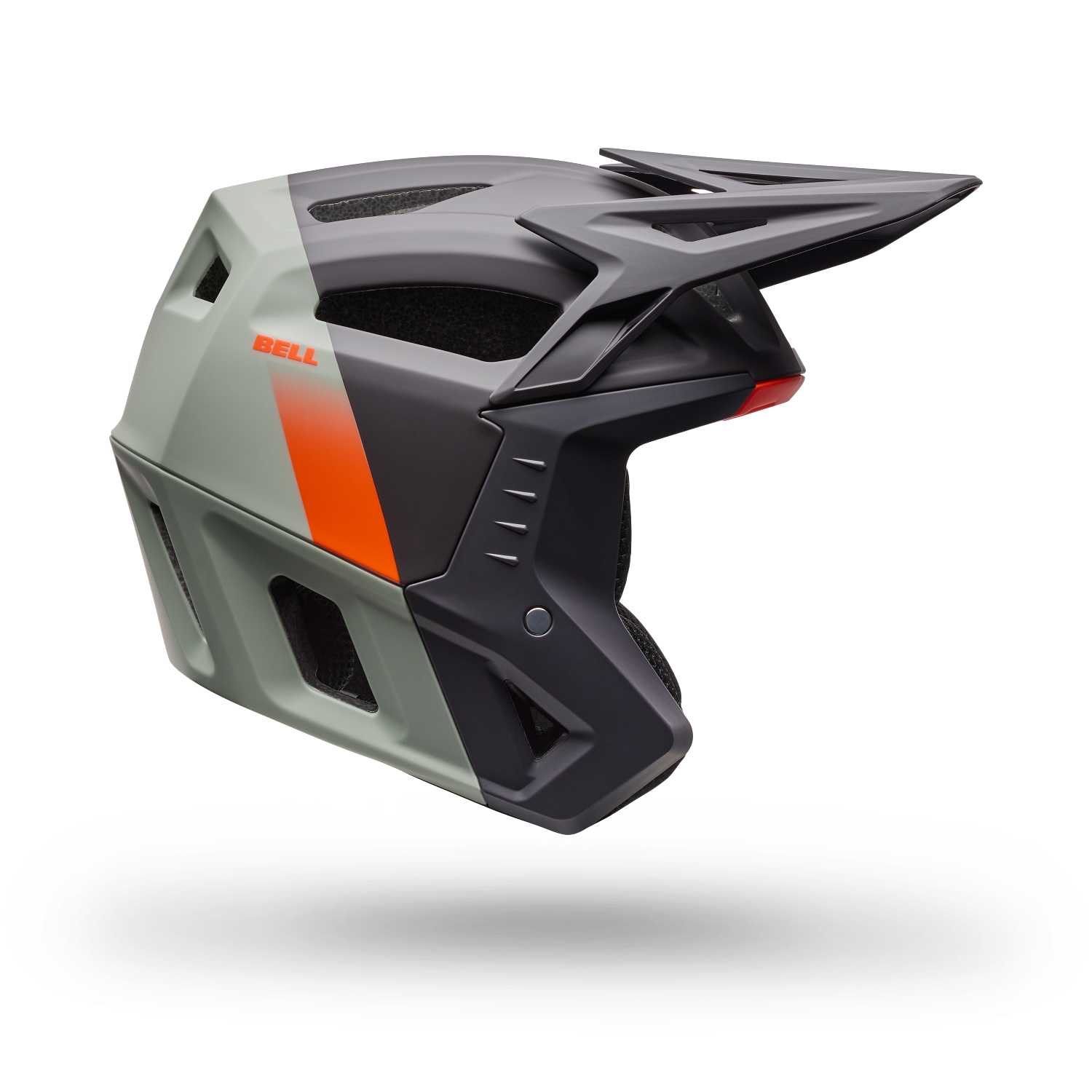
Bell calls this a half-shell without a chin bar and says it provides coverage around the upper neck and jaw. It is distinct from the full-face Full-Air Mips, although Bell says the two share design features; this wording does not establish equivalent coverage or an injury outcome.
Explore this need in the finder →Which named rotational-impact system does the exact page establish?
The exact US page names Advanced Mips Evolve. It does not call this Bell's Spherical Technology, so it does not meet the finder’s narrower Spherical/Mips filter. This is a model-feature distinction, not a crash-performance comparison.
Explore this need in the finder →What circumference intervals should be checked against this model?
Bell lists S at 51–55 cm, M at 55–57 cm, L at 57–60 cm and XL at 60–63 cm. Adjacent bands meet at 55, 57 and 60 cm; the L inch row conflicts with its printed metric range, so confirm that row before choosing it. None of these intervals determines head shape or fit.
Explore this need in the finder →Bell's 3Qtr-Air Mips is a US MTB helmet whose name signals an in-between shell format, but the useful distinction is more specific: Bell calls it a half-shell with no chin bar and describes coverage around the upper neck and jaw. The observed directory route is US style 100000000500000135, Rootbeer / M, SKU BL-7203531. This is an original document-based assessment of Bell's exact product page, not a ride review. I have not worn, fitted, weighed or impact-tested this helmet.
A three-quarter shell is not a full-face substitute
Bell places the model in its mountain-bike collection and in its 3/4 Shell family. The exact page says the design borrows features and technologies from the Full-Air Mips but removes that helmet's chin bar. Bell describes the result as a half-shell with additional coverage at the upper neck and jaw. That description is more helpful than treating it as an ordinary open trail shell, but it also draws a clear boundary: the page does not say that the 3Qtr-Air is full-face, convertible, or equivalent to the Full-Air's chin-bar coverage.
The closely related Bell Full-Air Mips makes a useful comparison because Bell itself links their design families. Full-Air is described as full-face; 3Qtr-Air is described as half-shell and expressly lacks the chin bar. This is a shell-format distinction, not evidence that one offers a better safety outcome. Match the chosen configuration to the intended discipline, exact product label and instructions.
Mips Evolve is not the Spherical label
Bell lists Advanced Mips Evolve, dual-density EPS and a Fusion In-Mold Polycarbonate Shell. Mips Evolve is a concrete design name, but this product page does not call it Spherical Technology powered by Mips. A shopper who specifically requires the Spherical/Mips design used by Bell's 5Fifty Spherical should not treat every Bell helmet carrying a Mips name as interchangeable. The 5Fifty Spherical assessment documents that separate construction. Neither label lets this review predict a rider's injury outcome or substitute for a helmet standard.
Bell's exact US page lists NTA 8776 (E-Bike), US CPSC, CE EN 1078-2012 and AS/NZ 2063. The page's CPSC line does not state an age threshold. These are manufacturer-listed standards, not measurements or independent certification work performed here. Check the marking inside the exact helmet and follow its instructions, particularly if a rider's age or e-bike use is central to the decision. A standards list on a product page cannot confirm the label or history of a used unit.
Four chart bands and a row to double-check
The exact US page offers S, M, L and XL and prints these centimeter intervals: S 51–55 cm, M 55–57 cm, L 57–60 cm and XL 60–63 cm. At the printed inclusive endpoints, adjacent options meet at 55, 57 and 60 cm. That gives the shopper concrete intervals to compare with a careful measurement, but it does not tell which shell, pad arrangement or pressure pattern will suit a particular head.
There is an important source inconsistency in the L row. Bell's page shows 57–60 cm but pairs it with an inch range of 21 3/8–23 1/2 inches; the lower imperial value does not agree with the displayed centimeter lower value. This assessment uses only the page's explicitly labelled centimeter cell for the finder and leaves the disagreement visible. If your decision depends on size L, ask Bell to clarify the current chart and confirm the exact size on the offer rather than assuming that one unit entry corrects the other. Do not carry the L discrepancy into S, M or XL.
Bell's manual describes checking the fit and adjustment of the chosen helmet and warns that correct placement matters. The manufacturer page captured here does not identify a dial or name a retention adjustment system for this model. The listed removable temple pads are described as allowing additional airflow; they are not a substitute for an adjustment mechanism or an indication that a numerical circumference range can be stretched. Try the exact helmet, adjust it according to its own instructions, and verify that it remains level and secure before riding.
Ventilation, visor and attachment claims
Bell names Dual Flow Ventilation and removable temple pads, but gives no verified vent count or measured airflow result. It also lists a two-position Flying Bridge visor, Sweat Guide, washable removable antimicrobial liner and Fidlock magnetic buckle. These descriptions help identify the configuration; they do not establish personal cooling, sweat management, comfort or antimicrobial performance.
The under-visor camera/light mount is another specific feature, not a complete camera kit. Bell's page does not identify a compatible device model, an accessory's inclusion in a seller package, or a recording or lighting result. The page also shows a Full/3Qtr-Air replacement visor separately, so check the exact offer for visor type, size compatibility and included parts rather than assuming every listing has the same package.
What the model evidence does not settle
Bell labels the listing unisex, but does not provide an age-specific rider designation on the captured US page. The page's “Certifications & Weight” section shows standards but no weight. It also provides no head-shape profile, numeric airflow data or individual fit result. Those are unknowns, not reasons to estimate a weight from Full-Air Mips or another Bell helmet, or to infer comfort from a photograph.
Bell's US recall page, checked November 1, 2026, names other product families rather than 3Qtr-Air Mips. A separate CPSC notice for Bell lists specified older models and style/color combinations, not this style number. These are date-bounded model-name screens, not a certificate for a particular unit and not a promise that no later notice will appear. Check the latest notice, condition, impact history, exact label and seller return terms for the actual helmet.
Primary material reviewed
- Bell's exact US 3Qtr-Air Mips style 100000000500000135 page for the Rootbeer / M configuration, size options, features, standards and chart.
- Bell's US MTB directory for the observed product category and card route.
- Bell's Bicycle Helmet Owner's Manual for general fit, position and adjustment guidance.
- Bell's US recall notice and the CPSC's 2025 Bell helmet notice for dated model/style screening.
This assessment summarizes primary-source statements and limitations. It does not report personal use, comfort, fit, testing, measured weight or cooling, crash performance, customer sentiment, a price, current inventory or compatibility with a particular accessory.
Key specifications
Key details at a glance
| Helmet style | Three quarter shell |
|---|---|
| Listed fit sizes | S / M / L / XL |
| Published circumference floor | 51 cm |
| Published circumference ceiling | 63 cm |
| US CPSC compliance stated | Yes |
| Rotational-impact design | Mips Evolve |
| Fit adjustments described |
Use the exact model’s instructions for operating limits, supplied equipment and version differences.
Sources for this review
Sources for this assessment
- Bell US MTB directory, observed 3Qtr-Air Mips style 100000000500000135 card
- Bell 3Qtr-Air Mips exact US style 100000000500000135, Rootbeer / M, SKU BL-7203531
- Bell Bicycle Helmet Owner's Manual, Part B5000433-F
- Bell US bicycle-helmet recall notice, date-bounded model-name screen
- CPSC 2025 Bell bicycle-helmet recall notice, model/style screen
Compare the model with your own constraints
A model assessment cannot decide fit by itself. Use the finder to combine riding use, head circumference and documented features, then verify the exact helmet and instructions.