
Your needs, this model
Does it fit your priorities?
Which riding use does Specialized state for the Loma?
The exact US page describes Loma as a road-and-gravel helmet. Its all-road wording does not itself document urban commuting, trail or downhill riding, so those finder options stay separate.
Explore this need in the finder →Is CPSC compliance documented for this Loma page?
Yes. The page states that helmets sold in the US and Canada comply with the CPSC standard for people age five and older. Verify the physical label and exact product identity before buying; a compliance statement does not determine personal fit.
Explore this need in the finder →Does a numeric head-size filter include Loma in this library?
No, not on this evidence. The Black US page lists S/M/L but does not expose the numeric circumference endpoints in the saved capture. Use the exact current chart and a try-on instead of inferring centimeters from its FS3 adjustment system.
Explore this need in the finder →Does Mips Essential Core meet a Spherical / Mips requirement?
No. The exact Loma page names Mips Essential Core, which the finder does not treat as Spherical Technology powered by Mips. If that specific design is essential, keep the exact filter rather than broadening the label.
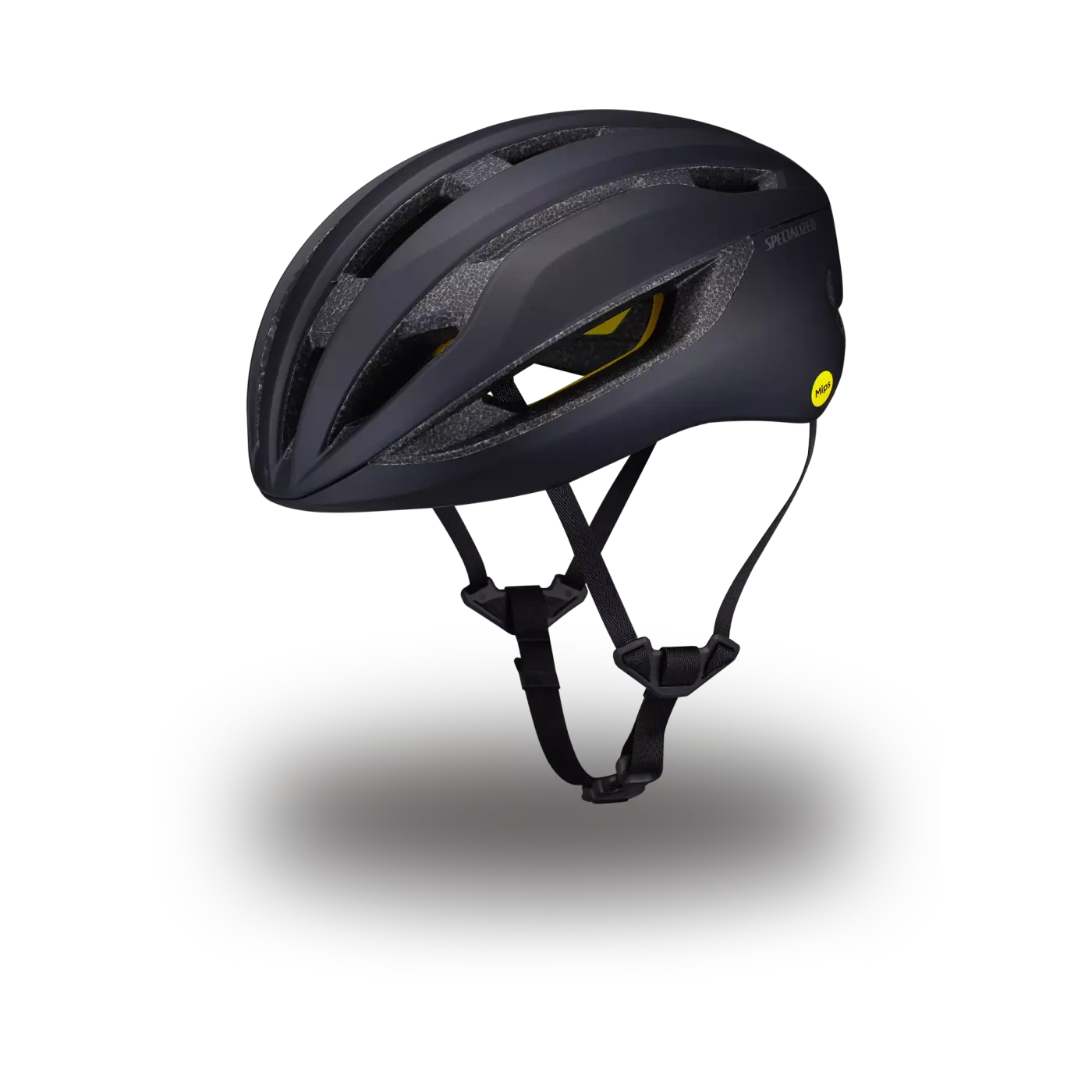
Explore this need in the finder →Specialized positions the Loma as a road-and-gravel helmet for riders whose routes mix surfaces. This assessment uses the exact Black US product page, which lists S, M and L, Mips Essential Core, a CPSC statement and a Medium weight of 290 g. It does not claim an actual fit, cooling test, weight measurement or crash result. The saved page also does not expose the numeric circumference endpoints for those letter sizes, so the Loma cannot pass this site's measured-head filter on the captured evidence.
Road and gravel are documented; commuting is not
The product page specifically calls the Loma a helmet for road and gravel riders and describes an all-road design. That supports those two finder uses. It does not name urban commuting in its exact text, and a broad all-road phrase is not enough to add another activity. The same evidence does not establish trail, downhill or child-specific use. Keep the activity choice narrow until the current manufacturer information for the exact model says more. Specialized highlights 4D Brow Cooling, internal channels and large rear exhaust ports. Those are descriptions of the design and intended airflow; they are not a measured cooling result. The page's Medium weight figure is similarly manufacturer-stated rather than measured by this review. It can be useful when comparing like-for-like size claims, but the 290 g number is not the weight of every size, finish or unit.
Fit details and missing circumference endpoints
The Loma page lists the FS3 Fit System and Occipital Base Adjustment, plus an adjustable Tri-Fix splitter and 10 mm webbing. Specialized describes these as adjustments for positioning the helmet and coordinating its angle with eyewear. It also describes dedicated sunglass-storage slots. These are concrete features to inspect if you often store glasses in your helmet; they do not show that every frame fits those slots or that the shell matches every head shape. Specialized labels the fit "Classic" and offers S/M/L on the Black US page. The exact page capture displays a Size Guide control, but the captured product and general size-guide page did not expose the numeric circumference range. I leave the Loma's head-size floor and ceiling unknown instead of borrowing a chart from the similar-looking Propero 4 or S-Works helmets. Consult the live exact-model chart, measure as instructed, and try on the chosen size. A retention dial can help position a properly sized helmet; it cannot turn unknown size endpoints into a numeric recommendation.
Standards and rotational-impact language
For US and Canadian helmets, Specialized states that Loma complies with the CPSC bicycle-helmet standard for people age five and older. This affirmative page statement is why it can appear when documented CPSC compliance is essential. The standard is not a warranty against injury; check the actual unit's label and verify the exact US model before choosing an offer. The page names Mips Essential Core and describes it as a low-friction layer. That label is not Giro's Spherical Technology powered by Mips. The finder deliberately requires the named Spherical architecture for that option, so a Mips-branded Loma is not a match to it. A shopper open to other designs can still compare the Loma's activity, adjustment and eyewear-storage documentation while keeping those names separate.
Comparing Loma with Chamonix 3
Both Loma and Chamonix 3 document road and gravel use, state CPSC compliance for the same age group, and name Mips Essential Core. Chamonix 3 additionally documents commuting, includes a removable visor and appears in Virginia Tech's bicycle-helmet database with a 2024 five-star entry. Loma instead names FS3 and Occipital adjustment and eyewear storage, with a manufacturer-stated 290 g Medium weight. The differences matter if a visor, eyewear provision or commuting language is central to your choice; they do not show that one helmet fits better. Both reviews leave circumference endpoints unknown, so neither should be selected from a numeric finder result here. A check of Specialized's US safety-notices page on October 31, 2026 did not identify Loma. That is only a dated model-level screen, not a certification about a used unit or a promise about future notices. Inspect condition, ask about impact history when buying used, check the current notice and confirm the return terms before purchase.
Who should keep it in the comparison?
Consider the Loma when the intended use is road or gravel and you want the manufacturer-documented CPSC statement, Mips Essential Core, FS3/Occipital adjustment, eyewear storage or stated Medium weight on one page. Do not count it as a numeric circumference match from the saved sources, a Spherical/Mips answer, or a documented urban/trail helmet. Check the current size chart and try the exact model on before relying on the comfort or adjustment language.
Key specifications
Key details at a glance
| Helmet style | Half-shell |
|---|---|
| Listed fit sizes | S / M / L |
| US CPSC compliance stated | Yes |
| Rotational-impact design | Mips Essential Core |
| Fit adjuster | FS3 Fit System with Occipital Base Adjustment |
| Fit adjustments described | FS3 Fit System / Occipital Base Adjustment / adjustable Tri-Fix web splitter / 10 mm webbing |
| Manufacturer-stated Medium weight | 290 g |
| Eye shield described | No |
Use the exact model’s instructions for operating limits, supplied equipment and version differences.
Sources for this review
Sources for this assessment
Compare the model with your own constraints
A model assessment cannot decide fit by itself. Use the finder to combine riding use, head circumference and documented features, then verify the exact helmet and instructions.