
Your needs, this model
Does it fit your priorities?
Which activity does the Ambush 3 exact US page support?
Specialized lists Trail & Enduro, so the evidence supports the finder’s trail option. The four-position breakaway visor, eyewear storage, BOA FS1 and FIDLOCK buckle define this arrangement; none of them expands the documented activity to road or child-specific use.
Explore this need in the finder →Can the Ambush 3 pass a required numeric head-size filter here?
No. Although the product page lists S, M and L, the saved source did not expose the exact model's circumference endpoints. Unknown ranges fail closed in the numeric finder. Check the live chart for the exact version and perform a real try-on rather than inferring a match from the BOA adjustment system.
Explore this need in the finder →Does the page establish CPSC or Spherical/Mips for the Ambush 3?
It does not establish either must-have in this evidence set. The exact page names Mips Air Node Pro but not Spherical Technology powered by Mips, and it contains no explicit CPSC compliance statement. Verify the product's own US label if CPSC is essential; an unknown field is not treated as a positive match.
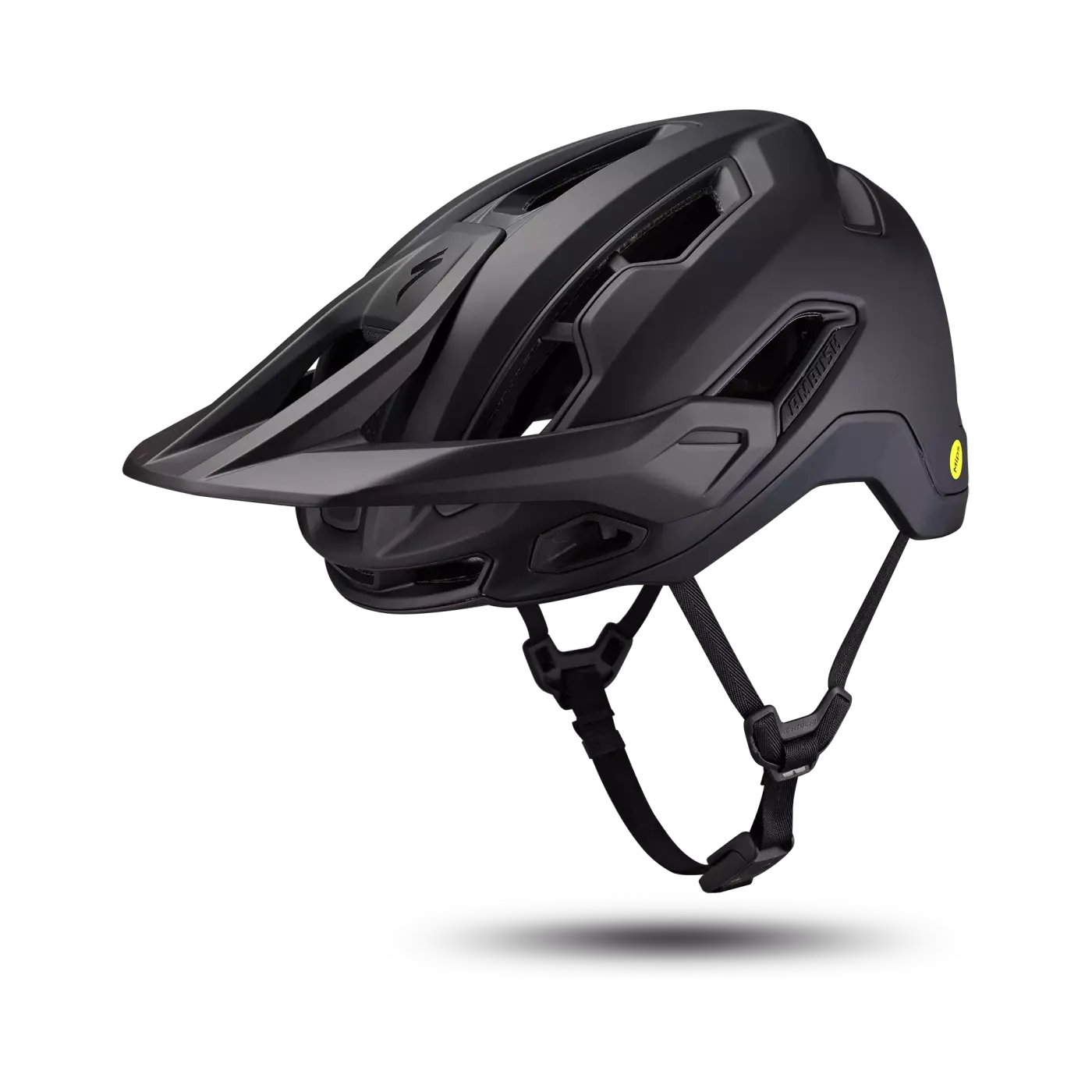
Explore this need in the finder →Specialized positions the Ambush 3 as a trail-and-enduro half-shell, and its exact Black US page makes the use case unusually clear. The page lists an internal composite AirCage, Mips Air Node Pro, BOA FS1 retention, a four-position breakaway visor, glasses storage and a magnetic FIDLOCK buckle. It is not a road aero helmet or a full-face downhill model. This assessment interprets the exact product page and its visible image; no helmet was worn, measured, tested or crash-evaluated by this site.
A trail arrangement with several distinct adjustments
One attraction is the combination of the BOA Fit System featuring FS1 and Specialized's description of a micro-adjustable 360-degree wrap. Rather than assuming that the dial shape guarantees a secure fit, treat it as a documented way to make fine tension changes around the head. The page also lists a TriFix strap system and replaceable soft pads. A FIDLOCK magnetic buckle is part of the closure; shoppers who prefer a conventional buckle or want to inspect how a magnetic clasp opens should confirm the actual unit before ordering. These details describe mechanisms, not proof that the helmet's shape will suit a particular head.
The visor has four positions and is described as breakaway. Specialized says there is room to mount glasses or other accessories and offers an optional VisorLock piece. That optional part matters: if a shopper expects the visor to remain fixed while carrying an accessory, the compatible piece and its installation need to be confirmed for the exact offer. The product page also documents storage slots for eyewear. No headlamp or camera mount is established here, and a generic accessory listing should not be treated as evidence that a mount is included or safe for this helmet.
Airflow claims are useful clues, not measured outcomes
Specialized calls the layout 4D Cooling and describes air entering through a Mouthport, passing through inline and deep internal channels, then exiting rear exhaust ports. The page calls the Ambush 3 its most ventilated trail helmet. Those statements explain the intended airflow path, but they do not quantify ventilation, show an independent comparison or tell us how much cooling a rider will perceive at a given pace or temperature. The listed 380 g weight also has no size basis in the captured product page, so it should not be compared as though it were a controlled same-size measurement against other helmets.
The page states that the shell integrates Mips Air Node Pro and mentions a Virginia Tech five-star rating. This review preserves the manufacturer's wording but does not convert it into an independently verified lab result or a guarantee about injury reduction. The specific rotational-system tag remains Mips Air Node Pro, which is not the same documented architecture as Giro Spherical Technology powered by Mips. If Spherical is a hard requirement, the Ambush 3 is excluded by the evidence even though it carries a Mips name.
Two important records remain unknown
The US page offers S, M and L and includes a Size Guide control, but the captured page and linked size-guide landing did not expose the Ambush 3 circumference endpoints. As a result, the measurement finder does not include it at 57 cm or any other numeric value. That is a missing chart in this local evidence record, not a claim that Specialized has no chart or that the helmet is unsuitable. Use the current model-specific chart and perform a try-on; BOA adjustment travel cannot be translated into a centimeter range.
The same product page capture contains no explicit US CPSC compliance statement. The absence of that text is not evidence that the helmet fails the standard, but this site cannot use an unverified assumption as a positive answer to a must-have filter. Check the exact product's physical label and manufacturer instructions. The date-matched Specialized safety-notices screen listed no Ambush 3 recall entry; that is a limited model-level screen, not proof that a particular used helmet has never been damaged or that future notices will not appear.
Who should compare it?
It belongs in a trail/enduro comparison for shoppers who value a four-position breakaway visor, a BOA adjustment system, a magnetic clasp, eyewear storage and a manufacturer-described channel layout. Before purchase, verify the size chart and label, decide whether the VisorLock is needed for the intended setup, check that the visor and glasses work together, and confirm that the exact seller is supplying the Ambush 3 rather than Ambush 2 or a replacement part. The reviewed library can support trail use; it cannot establish a numeric fit, explicit CPSC statement or Spherical/Mips requirement for this exact page.
Key specifications
Key details at a glance
| Helmet style | Half-shell |
|---|---|
| Listed fit sizes | S / M / L |
| Rotational-impact design | Mips Air Node Pro |
| Fit adjuster | BOA Fit System featuring FS1 |
| Fit adjustments described | micro-adjustable 360-degree BOA FS1 wrap / four visor positions / replaceable soft padding / TriFix strap system / FIDLOCK magnetic buckle |
| Eye shield described | No |
Use the exact model’s instructions for operating limits, supplied equipment and version differences.
Sources for this review
Sources for this assessment
Compare the model with your own constraints
A model assessment cannot decide fit by itself. Use the finder to combine riding use, head circumference and documented features, then verify the exact helmet and instructions.