
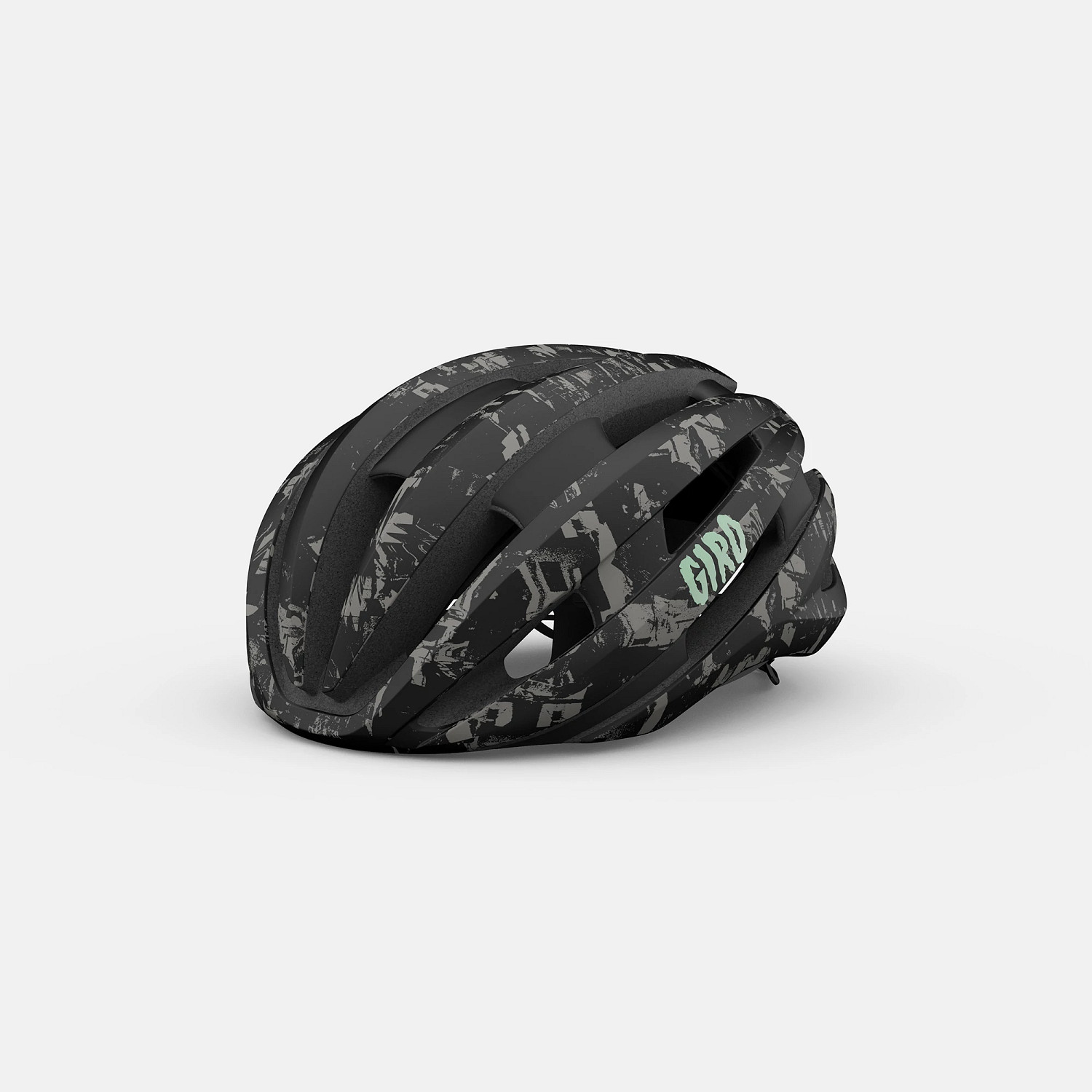
Your needs, this model
Does it fit your priorities?
Does the Synthe Mips II page support gravel as well as road?
Yes. Giro's exact US product description names both road and gravel riders. The recommendation does not add trail or commuting use, and the compact-profile language is not an aerodynamic test or a claim about measured speed.
Explore this need in the finder →Can Synthe Mips II meet a CPSC-required filter?
Not from the captured exact US product page: its certification panel names CE EN 1078 and does not state CPSC. The record is unknown rather than a claim of noncompliance, so verify the exact helmet label and current model documentation if CPSC proof is essential.
Explore this need in the finder →What fit and size information is actually published?
The exact page lists S, M and L and names Roc Loc 5 Air Mips with two-way tuning and independently adjustable vertical position/contact points. Giro's general adult chart spans 51-63 cm across those sizes; the page gives no numerical fit-system travel or head-shape profile.
Explore this need in the finder →Synthe Mips II is Giro’s compact-profile road-and-gravel helmet in the observed US directory, style 100000000300000130. The selected route is Matte Black Underground, and the exact page lists S, M and L without selecting a size in the original catalog card. Giro describes road and gravel use, Roc Loc 5 Air Mips two-way tuning and an integrated Mips system. This assessment is based on those source statements; it is not an aero, cooling, comfort or crash test.
A road-and-gravel brief, not a measured speed claim
The product description explicitly addresses road and gravel riders. Giro calls the shell compact and says it moves through the air easily, but supplies no wind-tunnel result or independent aerodynamic comparison in this captured US page. The practical distinction is therefore its intended riding category and stated design, not a numeric speed advantage. For gravel, that is useful context, but it does not establish mountain-trail or urban-commuting use.
The page names Roll Cage reinforcement inside the EPS liner, an integrated Mips layer and IONIC+ padding with a Pure Silver treatment. These design and material notes may help explain how the helmet differs from a simpler shell, but the source does not establish an independent durability result, odor-control duration or injury outcome. Mips is not the same as Giro’s Spherical design; if Spherical is a must-have, look for the exact model name and system statement rather than assuming all Mips helmets qualify.
Fit adjustments and the published circumference range
Giro identifies Roc Loc 5 Air Mips and says its dial offers two-way fit tuning, including independent vertical-position and contact-point adjustments. This is a useful setup distinction from a dial with only a single adjustment axis. The page does not quantify the mechanism’s travel in centimeters, so do not borrow an adjustment figure from another Giro model.
The product page offers S, M and L, while the embedded general adult chart maps those sizes to 51–55, 55–59 and 59–63 cm. That creates a 51–63 cm family span on paper. The ranges meet at shared chart endpoints; they do not say which size will feel right, whether the helmet suits a particular head shape or whether the retention system can compensate for a poor shell fit. Measure as Giro instructs, try the exact size, and verify level position and stability before riding.
Cooling language and what is not published
Giro describes Wind Tunnel channels and calls the helmet well cooled, but the exact US page gives no model-specific vent count or independent airflow data. That means the product can be compared on its described channeling and intended road/gravel use, not on an invented ventilation score. The captured page’s certification panel also does not state a weight for a particular size, so this review does not rank it as light or quote a number from another version.
Giro lists CE EN 1078. The captured exact US page does not state CPSC compliance. The matcher therefore leaves that field unknown and will not treat a CE statement as a substitute for a CPSC claim. If US CPSC documentation is essential, inspect the physical helmet label and current exact-style manufacturer materials before purchase. A missing web statement is an evidence limit, not proof of noncompliance.
Who should compare it
Synthe Mips II is a plausible road or gravel candidate for someone whose measurement falls inside the S/M/L chart and who values two-way retention adjustment, internal channeling and an integrated Mips design. It is less suitable as a research-backed match when the buyer needs a documented CPSC statement on the exact page, a measured aerodynamic benefit, a specific shell-shape guarantee or verified ventilation performance. Riders wanting Spherical/Mips should compare an explicitly named Spherical model instead.
At the offer stage, confirm style 130, the intended color and size, certification label, return policy and current recall status; the original listing route resolves a color but not a selected size. Inspect the helmet’s adjustment dial and straps according to the manufacturer’s instructions. The exact Synthe Mips II product page is the source for its use, fit and standards wording. A page match tells you what evidence exists, not how the helmet will ride on your head.
Key specifications
Key details at a glance
| Helmet style | Road half shell |
|---|---|
| Listed fit sizes | S / M / L |
| Published circumference floor | 51 cm |
| Published circumference ceiling | 63 cm |
| Rotational-impact design | Integrated Mips |
| Fit adjuster | Roc Loc 5 Air Mips |
| Fit adjustments described | Two-way fit tuning; vertical position and contact points can be adjusted independently; numerical fit travel not stated on the exact page. |
Use the exact model’s instructions for operating limits, supplied equipment and version differences.
Sources for this review
Sources for this assessment
Compare the model with your own constraints
A model assessment cannot decide fit by itself. Use the finder to combine riding use, head circumference and documented features, then verify the exact helmet and instructions.