
Your needs, this model
Does it fit your priorities?
What does the Syntax XL option add for sizing?
Giro's adult chart gives XL as 63–65 cm, extending the listed S/M/L range to 65 cm. If your circumference is near the upper edge, still try the shell on; a chart boundary cannot predict head shape or secure fit.
Explore this need in the finder →Is Syntax documented for mountain trails?
Giro's product description explicitly says it is designed for comfort on city roads or mountain trails, and the page categorizes it as a half-shell. This supports a trail answer in the finder but does not establish a full-face downhill use or every trail discipline.
Explore this need in the finder →Does Syntax's Mips system make it a Spherical helmet?
No. Giro describes integrated Mips in the Syntax and lists Roc Loc 5 Air Mips, but it does not describe Spherical ball-and-socket construction for this model. A Spherical requirement therefore does not match.
Explore this need in the finder →The Giro Syntax Mips stands apart from the Agilis Mips not because the name contains a different acronym, but because Giro documents a deeper shell profile and explicitly mentions city roads and mountain trails. It remains an adult half-shell, not a full-face downhill helmet. For riders comparing these two road-oriented Mips models, the Syntax has the more explicit trail-use statement and an extra XL option; the Agilis has a more compact all-roads description and an S/M/L chart range.
Coverage and intended use are the useful starting points
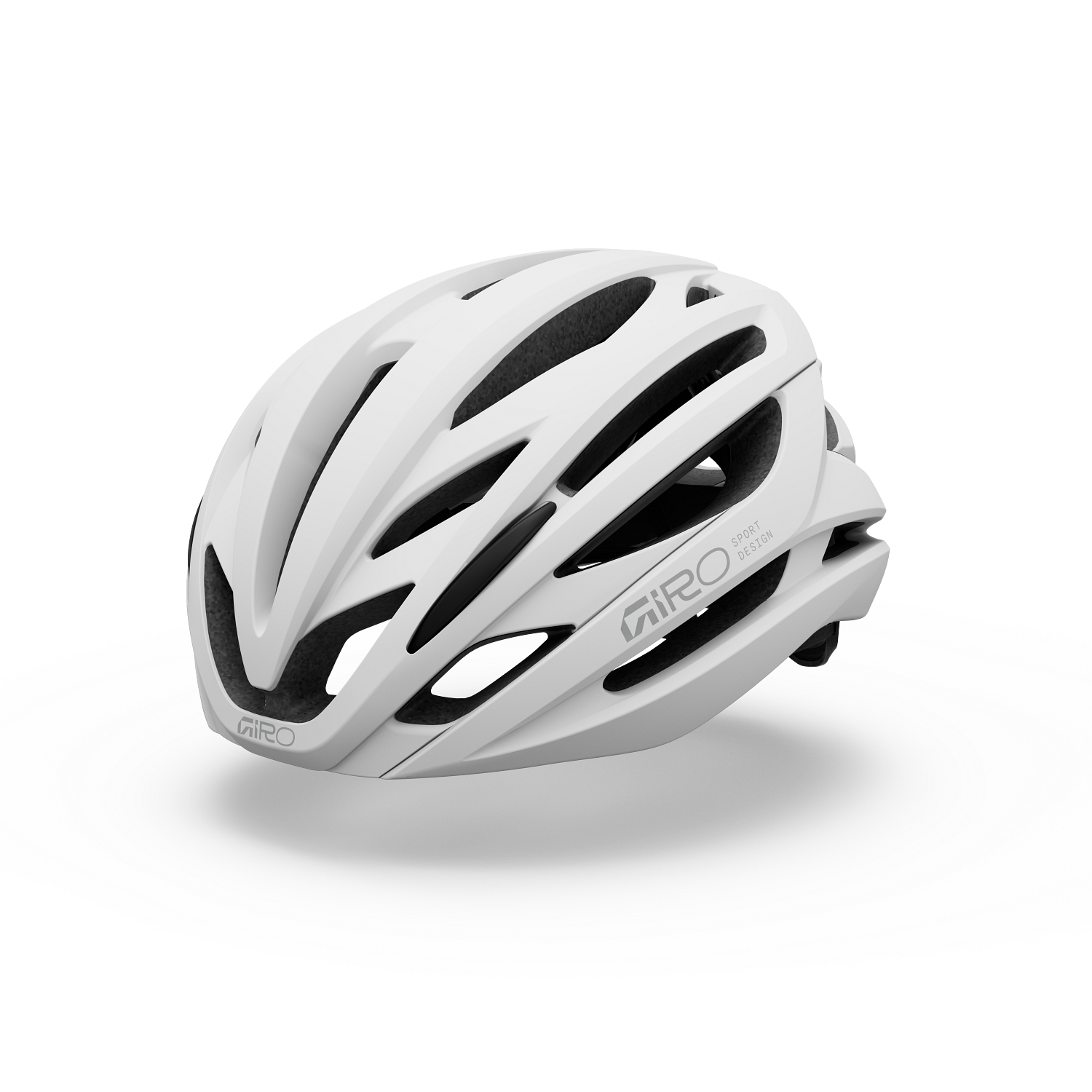
Giro describes the Syntax as having “slightly deeper coverage” and a slim design for city roads or mountain trails. Its catalog detail identifies it as a Bike, Unisex, Helmets, Half Shell product. That supports considering it for road use and the stated mountain-trail setting. It does not prove that every trail, speed or downhill discipline is appropriate. A half-shell helmet is not the same thing as a full-face configuration, and the sources reviewed do not establish a downhill certification or a model-specific e-bike rating.
The outer shell is described as polycarbonate fused to an EPS liner through an In-Mold process, with a lower hardbody wrap. Giro says this construction is meant to improve durability and ventilation without unnecessary bulk. I treat that as a design description rather than an independent durability result. No lab test or crash test for this review was conducted.
Mips integration and Roc Loc adjustment
The Syntax uses the Roc Loc 5 Air Mips system. Giro describes adjustable fit tension and fore-aft tilt, and says the suspended fit-system design allows airflow over the scalp. The listing also describes Wind Tunnel ventilation with internal exhaust channels and IONIC+ padding. These details make the feature set more specific than the Agilis page's named Roc Loc 5 Mips system, but do not let a reader rank actual airflow or comfort without trying both models. The page does not provide an exact vent count.
Its integrated Mips system is not the same as Spherical Technology. Giro explains its Mips-equipped designs as addressing rotational forces in certain angled impacts; that engineering goal is not a guarantee against injury. If Spherical is a must-have, the Syntax should not qualify simply because “Mips” appears in its name. The current finder keeps that distinction explicit.
The XL range is a meaningful selection difference
The product page lists S, M, L and XL. Giro's adult chart maps them to 51–55 cm, 55–59 cm, 59–63 cm and 63–65 cm. The resulting published circumference range extends to 65 cm, two centimeters beyond the S/M/L-only Agilis, Cielo, Helios and standard Aries records reviewed here. That is useful if a measurement lands in the larger interval, but it does not establish a good fit around the temples, forehead or back of the head. Follow Giro's measurement directions and try on the exact model; a circumference match is a starting screen, not a fit certification.
The manufacturer lists 280 g for size Medium and names CE EN 1078 in the certifications field. The US page captured for this review does not explicitly state CPSC compliance, so the matcher leaves that fact unknown rather than infer it from a US retail page. If you require documented US CPSC compliance, inspect the exact helmet's label and ask the seller for model-specific information before purchase.
How to compare it without making a safety shortcut
Against Agilis, Syntax's deeper coverage language, trail mention and XL size are the clearest documented differences. Against the Eclipse Pro, Syntax trades that particular aerodynamic emphasis and Spherical liner system for the trail-use statement and an integrated Mips fit system. These comparisons describe source claims; they do not establish which helmet is safer or better suited to a particular head. A fit that stays level and secure matters more than a longer list of features.
The Giro size guide says to measure with a tape level and to try on before riding. Check that the front sits low enough to protect the forehead without blocking vision, then adjust the retention and chin straps according to the product instructions. Do not use unapproved padding or excessive looseness to make a mismatched shell seem comfortable.
Bottom line
Syntax Mips makes the most sense to investigate when a rider wants Giro's documented deeper-coverage half-shell, a road-and-mountain-trail use description, or the chart's XL interval. Its Roc Loc 5 Air Mips adjustability and In-Mold Hardbody construction are concrete differentiators, while the exact vent count, head-shape profile and US CPSC statement remain unestablished in the reviewed US product copy. Confirm the edition and label, try the helmet on, and look for a full-face-specific option if your activity requires one.
Research note: this assessment is based on Giro's official US product page, size chart and general safety materials. No hands-on riding, ownership, fitting, impact testing, weighing or customer experience is claimed.
Key specifications
Key details at a glance
| Helmet style | Half-shell |
|---|---|
| Listed fit sizes | S / M / L / XL |
| Published circumference floor | 51 cm |
| Published circumference ceiling | 65 cm |
| Rotational-impact design | Integrated Mips |
| Fit adjuster | Roc Loc 5 Air Mips |
| Fit adjustments described | fit tension / fore-aft tilt |
| Manufacturer-stated Medium weight | 280 g |
Use the exact model’s instructions for operating limits, supplied equipment and version differences.
Sources for this review
Sources for this assessment
Compare the model with your own constraints
A model assessment cannot decide fit by itself. Use the finder to combine riding use, head circumference and documented features, then verify the exact helmet and instructions.