
Your needs, this model
Does it fit your priorities?
Can the Scamp be matched to a 49 cm measurement from the captured page?
Not from this evidence. The page shows XS and S but gives no circumference ranges for this style; the matcher leaves its numeric interval unknown. Ask Giro for the exact current chart and try the real helmet on.
Explore this need in the finder →What adjustments are named for the Scamp?
Giro describes a child-shaped Roc Loc Jr. dial system and PinchGuard buckle. The source does not state a numerical fit range or establish fit on a particular child.
Explore this need in the finder →Does the CPSC wording apply to all sizes?
The exact page says XS complies with the US CPSC bicycle-helmet standard for persons age one and older with extended head coverage. Its wording does not separately state the same claim for S, so check the exact size and physical label.
Explore this need in the finder →The Giro Scamp Helmet is a child-oriented bicycle model with XS and S options, a pinch-guard buckle and the Roc Loc Jr. dial fit system. Its exact US page also has an unusual evidence boundary: it says the XS complies with the CPSC bicycle-helmet standard for persons age one and older with extended head coverage, and lists 240 g for size Small, but it does not provide a circumference chart for this product in the captured page text. Because that size-specific range is not documented here, this assessment does not convert its XS/S labels into a numeric finder match.
What the manufacturer actually describes
The observed catalog entry is Giro Scamp Helmet, US style 100000001400000076. The Teal / Small route is SKU GR-7209601; the exact page shows XS and S in the product family. Giro describes a helmet for children's first rides and identifies a PinchGuard buckle and Roc Loc Jr. adjustment. The fit system is a child-shaped dial operated by an adult, according to the manufacturer. The page also calls the shell a two-piece construction: a hard outer shell with a polycarbonate lower wrap fused to the liner. This is not a claim that I assessed the material, comfort or durability in person.
The specific page does not give a vent count, head-shape description, size circumference range, Mips technology or trail-use claim. Those omissions remain unknown for this exact source record; I do not fill them by copying details from Scamp II, Scamp Mips II or another youth Giro model. In particular, the page's mention that the shape was inspired by adult Montaro designs is not documentation of mountain-bike suitability or of the adult helmet's functions.
Fit needs a try-on; XS and S do not define centimeters
Although XS and S are offered, no numerical interval appears in the exact US Scamp page captured for this review. Without a model-specific chart I cannot say that a 49 cm or any other measurement lies within its sizing range. A generic label shared by other youth helmets is not enough to import another model's range. Measure the child's head, ask Giro or a qualified retailer for the current model-specific chart, then physically check placement, retention, coverage and comfort with the exact size. A match on the child-use filter alone says nothing about fit.
The fit information that is documented is mechanical rather than numerical: Giro says Roc Loc Jr. has a large rubberized adjustment knob and is shaped for a child's head, and the page names a PinchGuard buckle. These features may be useful for a caregiver making adjustments, but the source does not quantify the fit system's range or establish how easy it is for a particular adult or child to use. Confirm the buckle closes properly and that straps follow the manufacturer's instructions.
Certification is explicitly size-qualified
Giro's page says “XS” complies with the US CPSC Safety Standard for Bicycle Helmets for Persons Age 1 and Older and references extended head coverage. The wording should not be generalized beyond the XS configuration without verifying the exact size and the helmet's label. The same line gives a 240 g figure identified as a size-S CPSC weight; this is a manufacturer number, not an independent weight check. For that reason the finder treats the exact CPSC statement as supported for the XS plan while leaving the S plan's model-page compliance field unknown.
This claim does not certify a personal fit, predict injury outcome, or establish a minimum age for every use case. Inspect the physical helmet's standard mark and age/model label and consult the exact instructions. The page does not name Mips, but that alone is not a laboratory finding that proves the absence of every rotational design.
Where it belongs in a comparison
Scamp is worth a closer look if a child-specific Roc Loc Jr. dial, the PinchGuard buckle, and its XS certification wording are relevant. The documentation is too incomplete for a questionnaire that requires a precise head-circumference interval, and it does not support trail, urban, or Spherical/Mips requirements. Compare the Scamp II and Scamp Mips II as separate named products: their manufacturer pages include different detail and their documented Mips status cannot be borrowed to this one.
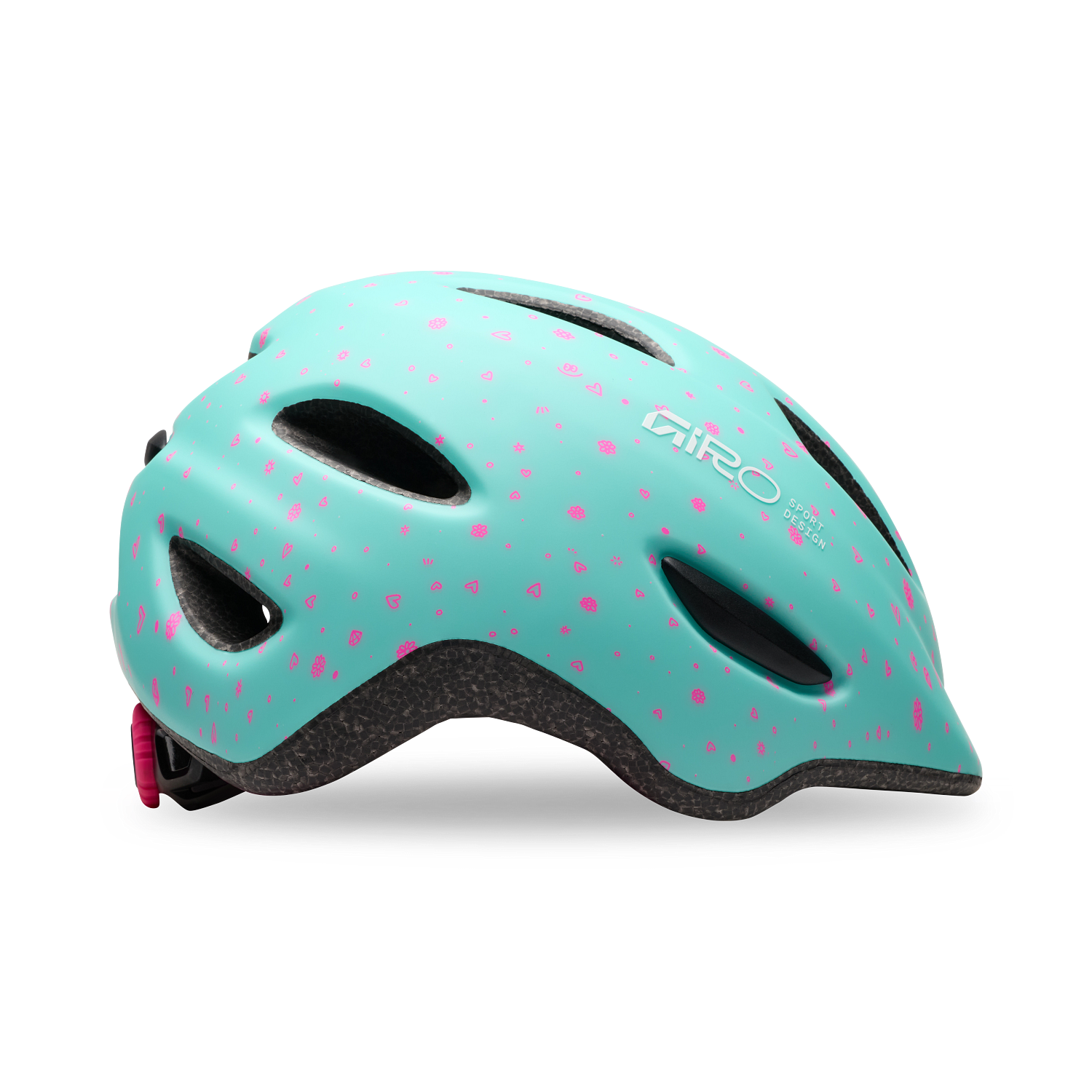
Before selecting an offer, check US style 100000001400000076, exact SKU GR-7209601 only if the chosen route is Teal / S, size, physical markings, model-specific sizing information, instructions and return terms. The image is a manufacturer reference for the Teal edition, not a fit or condition check. A used helmet's impact history and current seller stock cannot be known from this page.
Research basis: Giro's US Scamp style page and the manufacturer's US recall information were checked for this assessment. This is source-based analysis only; it does not claim ownership, riding, personal fitting, measuring, weighing or testing.
Key specifications
Key details at a glance
| Helmet style | Half-shell |
|---|---|
| Listed fit sizes | XS / S |
| Fit adjuster | Roc Loc Jr. |
| Fit adjustments described | child-shaped dial adjustment / PinchGuard buckle |
Use the exact model’s instructions for operating limits, supplied equipment and version differences.
Sources for this review
Sources for this assessment
Compare the model with your own constraints
A model assessment cannot decide fit by itself. Use the finder to combine riding use, head circumference and documented features, then verify the exact helmet and instructions.