
Your needs, this model
Does it fit your priorities?
What lighting and remote functions does Giro document for Ethos Mips?
The exact page describes two white front lights, two red rear lights, amber turn signals and a handlebar remote for modes, brightness and signaling. It estimates 10 hours in low-blink or 5 in high-blink operation, with 45 front and 30 rear lumens in the high mode. Those are manufacturer estimates, not an independent visibility test; keep the system charged and consult the exact instructions.
Explore this need in the finder →Does this exact Ethos Mips page state US CPSC compliance?
Yes. Giro's exact US style-038S page states compliance with the US CPSC bicycle-helmet standard for persons age five and older, and gives 475 g for size Medium CPSC. Inspect the physical label and confirm the exact model and package rather than treating a web listing as a fit or protection guarantee.
Explore this need in the finder →Does Ethos Mips meet a Spherical/Mips must-have?
The page describes an integrated Mips system but does not describe Giro's Spherical ball-and-socket design. The finder therefore does not count this model as meeting a Spherical/Mips requirement; those labels identify different documented systems here.
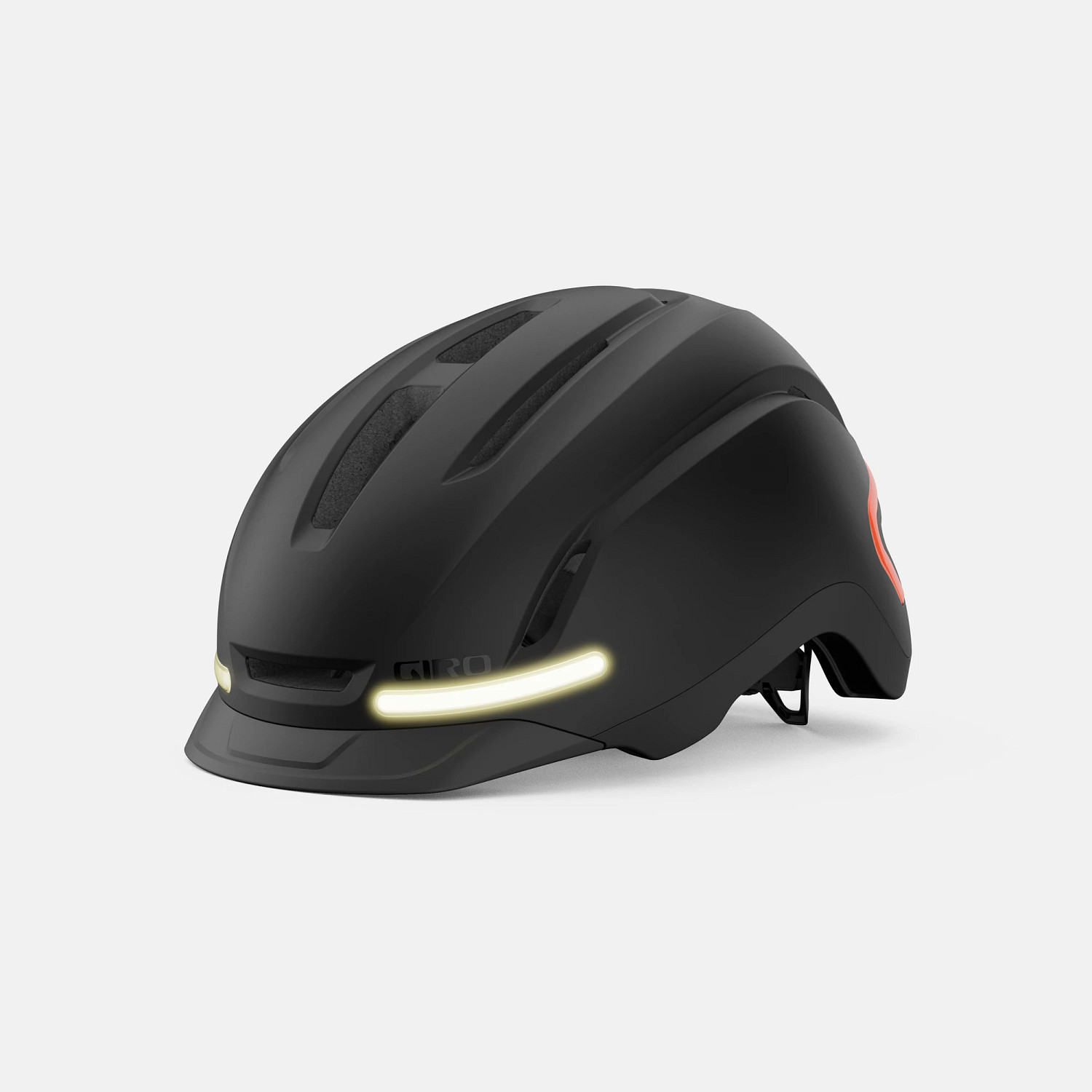
Explore this need in the finder →The Ethos Mips is a commuting-oriented half-shell whose defining feature set is integrated lighting plus a handlebar remote. Giro's exact US style 038S page describes white front lights, red rear lights and amber turn signals, with controls for brightness and flashing patterns. It also gives a CPSC statement and lists S, M and L. That combination makes the helmet unusually specific to an urban-use shortlist, but it does not establish how visible a rider will be in real traffic, whether the setup suits every commute or how it fits a particular head. This is a document-based assessment, not a road test.
Integrated visibility equipment changes the decision
Giro describes two white front LEDs and two red rear LEDs built into the helmet, with reflective threads in the retaining webbing. An amber turn signal system is operated through a handlebar-mounted remote. The exact page says the remote can select steady or flashing output, alter brightness and activate the signals. For a commuter who wants these functions attached to one helmet-and-remote setup, the listed controls may be more relevant than a generic claim of being "bright"; the source does not provide independent visibility testing.
Integration also makes ownership more dependent on a charged system. Giro says the helmet and remote recharge through USB-C. Its published estimates are ten hours in low-blink mode and five hours in high-blink mode; at high output it gives 45 lumens at the front and 30 at the rear. Those figures are manufacturer statements, not runtime measurements from this review. Plan around actual ride length and charging habits, and consult the current instructions for operation, charge indication and care. The page does not establish a water-resistance rating for the electronics.
Fit and standards still come first
The exact 038S page lists S/M/L, which correspond to Giro's 51–55, 55–59 and 59–63 cm chart intervals. Although Giro's general bicycle chart also shows an XL interval, this exact Ethos page lists only three sizes. The documented range for this style therefore stops at 63 cm; the presence of an XL row on the general chart is not evidence that Ethos style 038S is sold in XL. A chart match is only a way to narrow try-on candidates. It does not resolve head shape, comfort or a secure fit.
Roc Loc City Mips is the named fit system. Giro describes three vertical positions and a 6 cm adjustment range. That 6 cm figure concerns the fit hardware; it is not a head-circumference allowance. The page lists 475 g for size Medium CPSC, a manufacturer-reported figure rather than a weight measured here. If either weight or fit is decisive, verify the exact size and try the helmet on rather than treating the summary as personal evidence.
The same exact US page states compliance with the CPSC Safety Standard for Bicycle Helmet for Persons Age 5 and Older and names an integrated Mips system. It does not identify Spherical Technology. Riders who specifically require Giro's Spherical design should not treat every Mips label as interchangeable. The compliance wording is also not a guarantee against injury; inspect the physical label on the exact unit.
Do not confuse Ethos Mips with the Shield model
Giro's description distinguishes Ethos Mips from Ethos Mips Shield, which adds a clear molded eye shield. The observed 038S page is the standard Ethos Mips, not the 039S Shield configuration. A seller image showing a visor or shield should therefore prompt a check of the model name, style number and included package. That difference is not cosmetic if the shield is a requirement; it should be assessed from the exact version rather than borrowed from the sibling listing.
The standard page also describes a soft TPU brim, hardbody coverage and quick-dry padding. Those details may affect a shopper's preferences, but no head-shape profile, measured ventilation, rain test or subjective comfort result appears in the reviewed source. The phrase "waterproof brim" is the manufacturer's description of that component; it does not establish an ingress rating for the lights or batteries.
Limits of the lighting claim
Built-in lights can simplify a setup, but they cannot be assumed to cover every visibility need. Giro's page describes the front LEDs as "be-seen" lights and the rear LEDs as visible to drivers; this is the manufacturer's intent, not a tested claim under every road, weather or daylight condition. The source does not establish whether the lights meet every local equipment requirement or replace a rider's other lighting choices. Keep the remote, charge state and exact operating instructions in the decision, and do not infer a backup mode if the battery is depleted.
Because lighting is integrated into the helmet, inspect how the controls sit on your own handlebar and whether your preferred riding position makes them accessible. Giro presents the remote as intuitive, but that is not a hands-on finding from this review. A rider who prefers a simpler helmet or who does not want another battery to monitor may reasonably prefer a model without built-in electronics.
What to verify before a purchase
Confirm style 100000001800000038S, the selected color and size, the CPSC statement, and whether the seller's exact package includes the described remote and the charging accessories you expect. Check the fit instructions and return terms before making a final choice. The recalled Merit helmet is the only product named on Giro's recall page captured for this assessment; this dated check is not a guarantee about future notices or the history of any particular unit.
Ethos Mips stands out when integrated rechargeable lights and remote-controlled signals are central to a commuter's workflow. It has useful published details—mode estimates, lumen claims, CPSC wording and a specific chart—but those facts answer different questions: none proves fit, runtime in your conditions or visibility to another road user. The model's strongest case is a carefully checked try-on for someone who values the combined helmet-and-light system and is comfortable maintaining it.
Key specifications
Key details at a glance
| Helmet style | Urban half shell |
|---|---|
| Listed fit sizes | S / M / L |
| Published circumference floor | 51 cm |
| Published circumference ceiling | 63 cm |
| US CPSC compliance stated | Yes |
| Rotational-impact design | Integrated Mips |
| Fit adjuster | Roc Loc City Mips |
| Fit adjustments described | three vertical fit-system positions / 6 cm fit-system adjustment range; not a circumference range |
| Manufacturer-stated CPSC Medium weight | 475 g |
Use the exact model’s instructions for operating limits, supplied equipment and version differences.
Sources for this review
Sources for this assessment
Compare the model with your own constraints
A model assessment cannot decide fit by itself. Use the finder to combine riding use, head circumference and documented features, then verify the exact helmet and instructions.