
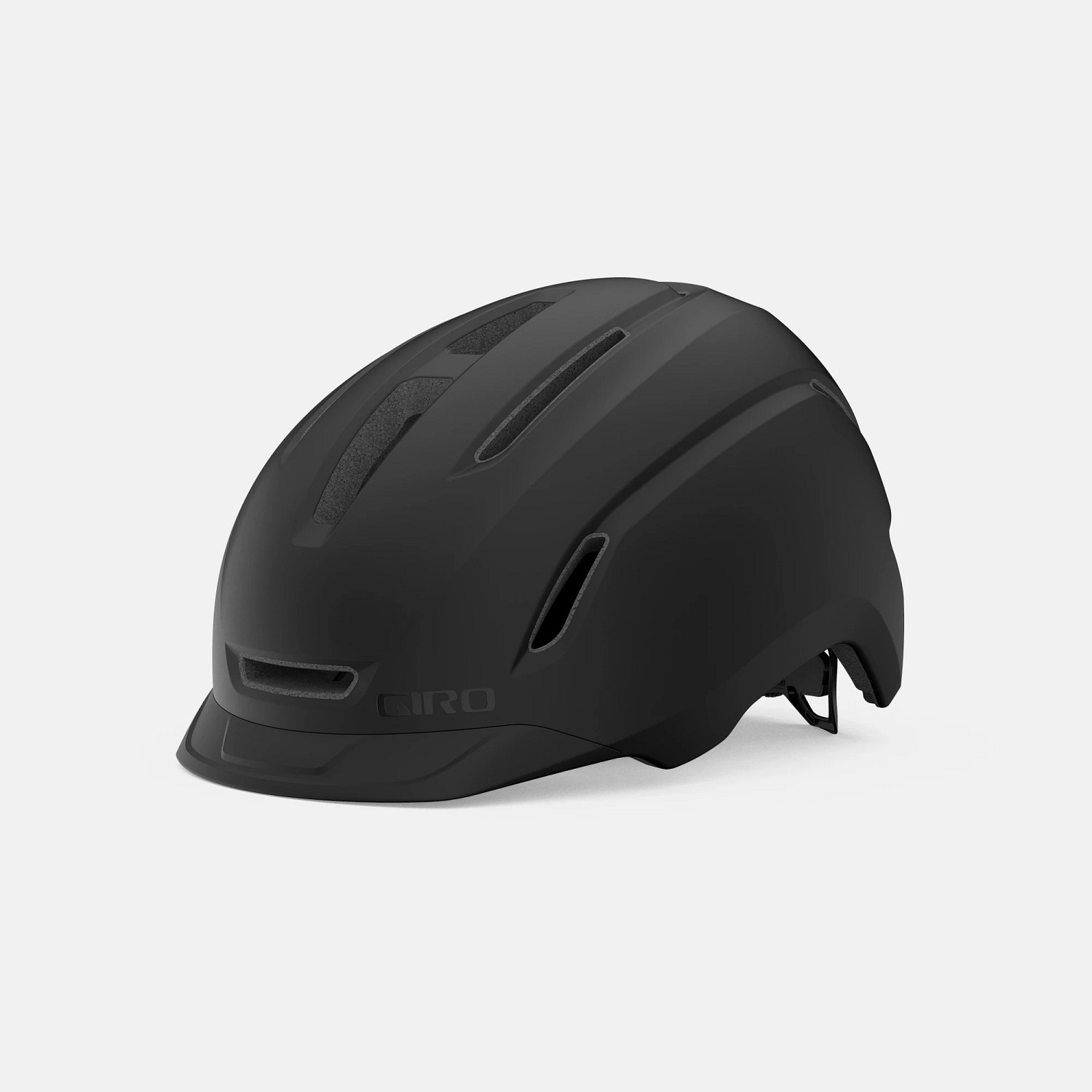
Your needs, this model
Does it fit your priorities?
Which Caden version is this assessment about?
This is the exact US Caden II page, style 100000001800000036. It is not Caden Mips II style 032 or Caden LED Mips style 028; their different pages and features are not transferred here. The style-036 page does not name Mips.
Explore this need in the finder →What size range and adjustment claim does Caden II provide?
The exact page offers S/M/L and Giro's linked adult chart spans 51–63 cm. Roc Loc City has three vertical positions and a stated 6 cm range, but that figure is fit-system travel, not an expansion of the circumference chart.
Explore this need in the finder →Does the exact Caden II page support a hard CPSC request?
Yes: the exact US style-036 certification line states CPSC compliance for persons age five and older and lists 330 g for a CPSC Medium. Verify the actual helmet's label; the statement and chart are not fit or injury guarantees.
Explore this need in the finder →The name can be easy to misread: Giro's Caden II style 036 is not the Caden Mips II style 032 or the Caden LED Mips style 028. The US style-036 page describes an urban helmet with a cap-like visor, reflective details, a lock port and Roc Loc City. It also states CPSC compliance for people age five and older and lists 330 g for a Medium CPSC configuration. Those facts belong to this page and model only.
Who should compare the Caden II
This is a reasonable entry in a city-oriented shortlist when the rider values a visor that resembles a cycling cap, a point for securing the helmet with a bike or bag, and a rear fit system with vertical adjustment positions. Giro describes the model for street use and an on-the-go routine. That is a manufacturer brief, not an independent visibility, theft-prevention or crash-performance result. A lock port makes a place to pass a lock; it does not make the helmet, bike or lock theft-proof.
The style-036 page does not name Mips. That is a meaningful distinction for a shopper comparing Caden II with Caden Mips II or Caden LED Mips: the adjacent products have their own feature records and their names should not be blended into this model. The page also does not claim Spherical Technology. A rider who treats either rotational-design label as essential should check the exact style rather than infer it from the Caden family name.
Chart range and the Roc Loc City adjustment
The exact product page offers S, M and L. Giro's linked adult chart maps those sizes across 51–63 cm. That range can help decide which helmets are worth trying, but it cannot predict internal shape, pressure points, stable retention or comfort on a particular head. Giro itself recommends trying a helmet before riding. Measure with a flexible tape as the manufacturer instructs, compare the exact model's chart and then check the actual shell position, straps and retention.
Giro describes Roc Loc City as having three vertical positions and a 6 cm range. That is a claim about the fit system's adjustment, not an extra 6 cm of head circumference. It cannot extend the published 51–63 cm chart. The current source pages do not identify a head-shape profile or give a more precise fit result, so no shape-based recommendation is warranted here.
Construction, ventilation and standards evidence
The page describes a hard outer shell joined to an In-Mold Hardbody lower wrap, plus a TPU cycling-cap-style visor and reflective accents. Giro also describes Wind Tunnel ventilation, but this exact page supplies no numeric vent count. The product copy does not establish how cool the helmet will feel on a particular commute. Vent layout, hair, weather, pace and fit all affect a rider's experience; a manufacturer ventilation description is not a measured cooling test.
For standards, the exact US page says the helmet complies with the CPSC bicycle-helmet standard for persons age five and older. The same panel lists 330 g for a Medium CPSC size. That weight is a manufacturer specification for the stated size, not an independent weighing or an estimate for S or L. Before buying, check that the physical item is the exact Caden II style and that its label matches the claim. CPSC compliance is not a promise against all injury, and it does not decide fit.
Tradeoffs and version checks
The Caden II's practical attractions are urban details, not a documented Mips system, a measured ventilation advantage or an anti-theft guarantee. Giro's page lists an adjustable system but not a model-specific head-shape profile. It does not give a counted vent total. A 6 cm Roc Loc figure should not be confused with chart coverage. These omissions do not prove the helmet performs poorly; they simply limit what this source-based assessment can claim.
When comparing named alternatives, the Caden Mips II and Caden LED Mips should be checked by exact style, not treated as feature variations automatically included with Caden II. The latter's light information and the former's Mips wording are separate evidence. Other urban helmets in the library also differ in whether their exact US pages state CPSC, describe a rear light or include a shield.
Bottom line
Consider style 036 if the exact urban details and a published 51–63 cm S/M/L range are relevant, and if you can verify the offered size and label. Do not choose it from circumference alone, assume the adjustment dial expands the chart or borrow Mips details from another Caden. A physical try-on and exact-model check remain essential. This assessment uses the linked manufacturer material; it does not claim a ride, personal fitting or independent test.
Key specifications
Key details at a glance
| Helmet style | Urban half shell |
|---|---|
| Listed fit sizes | S / M / L |
| Published circumference floor | 51 cm |
| Published circumference ceiling | 63 cm |
| US CPSC compliance stated | Yes |
| Fit adjuster | Roc Loc City |
| Fit adjustments described | Three vertical positions and a stated 6 cm fit-system range; this is not additional head circumference. |
| Manufacturer-stated CPSC Medium weight | 330 g |
Use the exact model’s instructions for operating limits, supplied equipment and version differences.
Sources for this review
Sources for this assessment
Compare the model with your own constraints
A model assessment cannot decide fit by itself. Use the finder to combine riding use, head circumference and documented features, then verify the exact helmet and instructions.