
Your needs, this model
Does it fit your priorities?
Could the Aries Spherical suit warm-weather road rides?
Giro describes Wind Tunnel vents and deep internal channels, but its same US page gives conflicting counts of 21 and 24. The architecture is documented; the exact count and real-world cooling advantage are not verified here. Fit, speed, weather and personal comfort still matter.
Explore this need in the finder →Which published size range covers a 57 cm head?
Giro's general bicycle chart places 55–59 cm in Medium, so 57 cm falls within that guide range. The chart is a starting point, not proof of a good fit: try it on, keep the shell level and snug, and confirm the retention straps hold it in place.
Explore this need in the finder →Can I require a documented Spherical/Mips system and US CPSC compliance?
The standard US product page describes Spherical Technology powered by Mips and states compliance with the US CPSC bicycle-helmet standard for persons age five and older. Those are manufacturer statements about the model; check the exact helmet label and fit, and do not treat a rating or mechanism as a promise against injury.
Explore this need in the finder →Is this the right style for downhill or full-face riding?
The US product record categorizes the Aries as a half-shell road helmet, and this review does not establish it for trail use. The finder therefore returns no documented trail fit. For downhill riding or any activity that requires a full-face helmet, verify the exact model and its applicable certification directly.
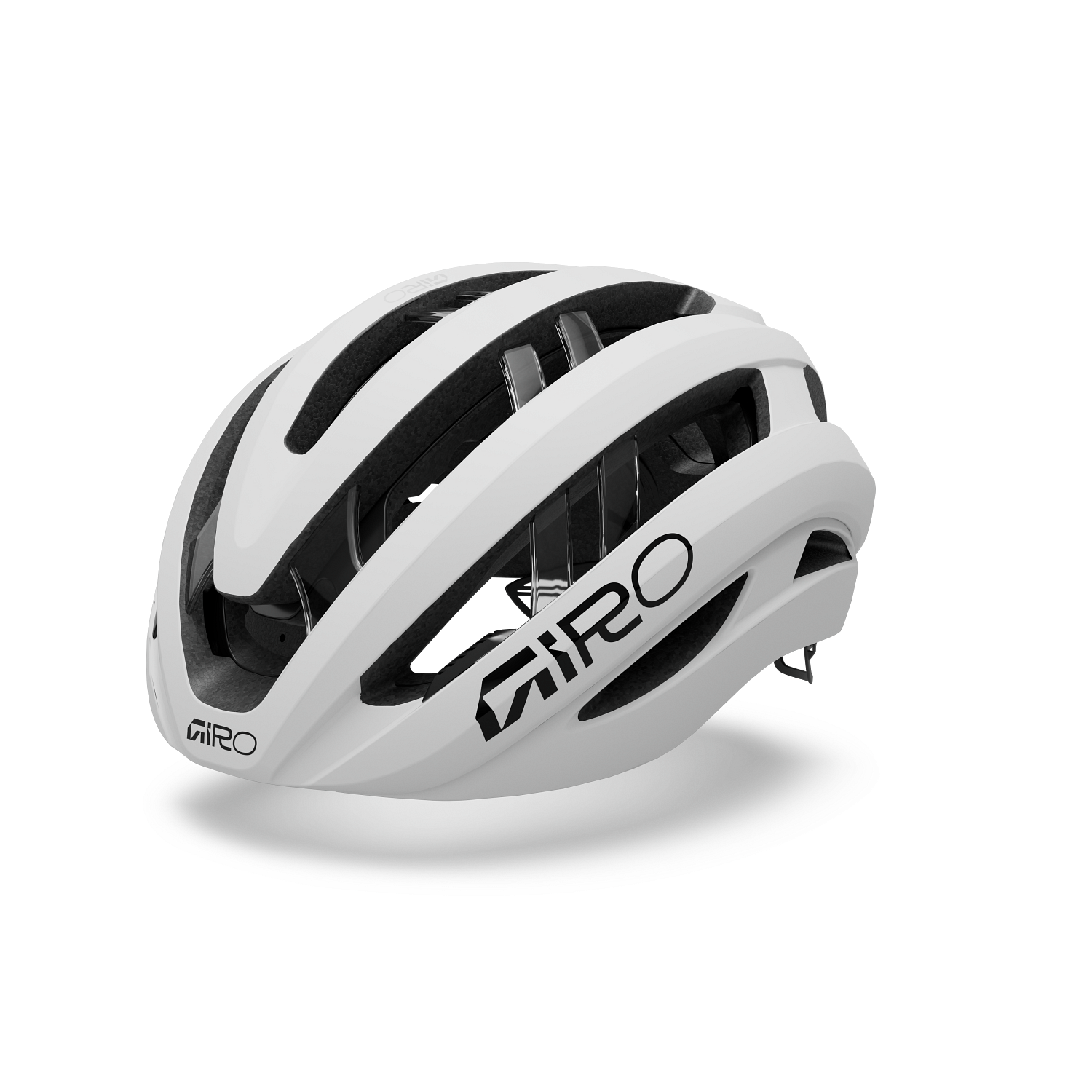
Explore this need in the finder →The Giro Aries Spherical is a road-oriented, half-shell helmet built around a specific proposition: combine a relatively open vent-and-channel layout with an adjustable fit system and Giro's Spherical Technology powered by Mips. That makes it a plausible candidate for adult road riders who want an airy design and a documented rotational-impact system. It is not a universal answer for every riding style, head shape or budget. This is a source-based assessment of the standard US model and the separately listed finish-only Special Edition; it is not a ride test or a fitting session.
The protection story, without the shorthand
Giro's US product page says the Aries complies with the CPSC bicycle-helmet standard for people age five and older. That is a useful baseline to verify on the exact helmet and its label, not a promise that any helmet prevents every injury. The CPSC's helmet guidance emphasizes proper fit, correct wearing and checking the helmet's own instructions and markings.
Giro describes Spherical Technology as a ball-and-socket arrangement in which an outer liner can rotate around an inner liner to help redirect forces in certain impacts. The important distinction is between an engineering feature and a personal outcome: this description does not guarantee that a crash will not cause a concussion or another injury. The Virginia Tech Helmet Lab's 2026 bicycle ratings list the Aries at five stars, with a STAR score of 8.40 and a rank of 13 among 308 helmets tested. That is a model-level result within the lab's bicycle test method, not a ranking of every helmet sold or a prediction for an individual rider.
Ventilation is a design priority, but one number is unresolved
The product page describes deep internal channels, Wind Tunnel venting and an AURA II reinforcement arch. Giro also describes a DryCore brow pad with an internal silicone bead intended to redirect sweat, plus Ionic+ padding. These features show that airflow and sweat management are central to the design. They do not tell us how cool the helmet will feel on your route, in your weather or at your pace.
There is a small but consequential documentation mismatch: the same US page refers to 24 vents in its main description and 21 in one feature bullet. Rather than choose the more favorable figure, this review leaves the count unresolved. If vent count is the deciding spec, confirm it with Giro before relying on it. The channeling and adjustable fit remain the more useful documented points.
Fit starts with your head, not the helmet's feature list
Giro lists S, M and L for this model. Its general bicycle size chart maps S to 51–55 cm, M to 55–59 cm and L to 59–63 cm. Giro presents that chart as a guide and recommends trying the helmet on before riding. A 57 cm circumference, for example, falls inside the stated Medium range; it does not prove the shell suits the rider's head shape or that the straps and retention system will sit correctly.
The Roc Loc 5+ Air system is described as adjusting retention tension and fore-aft tilt. Those adjustments can help dial in a stable position, but they cannot make the wrong shell shape fit. Measure with a flexible tape held level, choose a size from the model's chart, then check that the helmet sits level, stays put and does not obstruct vision. Use the exact owner's instructions and return terms if the fit is not right. A size label is only a starting point.
What the weight and construction details do—and do not—say
Giro states 275 g for a Medium in the CPSC configuration. Treat that as the manufacturer's figure for that size and version, not a measurement made for this review and not a promise that every size weighs the same. The page also describes dual-density Nanobead EPS in its Progressive Layering construction and full lower hardbody coverage. These are useful distinctions to compare with other documented designs, but material names alone do not settle fit or safety.
Who should keep looking
The Aries is categorized on Giro's US page as a road, half-shell model. The evidence reviewed here does not establish it as a full-face or downhill-specific option, and it does not establish an e-bike-specific NTA 8776 certification for this exact US configuration. Riders who need those use cases or that certification should compare models with explicit, exact-model evidence instead of treating a road helmet as interchangeable.
Likewise, a rider outside the published 51–63 cm range, or one whose shape is uncomfortable in Giro helmets, should not try to solve the mismatch by loosening the retention system or adding unapproved padding. Fit is a real selection constraint, not a preference that a feature list can compensate for.
Bottom line
The Aries Spherical is a well-documented candidate for an adult road rider whose measured circumference falls within Giro's chart and who specifically wants the model's Spherical/Mips design and Roc Loc adjustment. Its manufacturer-stated CPSC compliance and current Virginia Tech result are worth checking, while its ventilation-count inconsistency and lack of published head-shape guidance deserve equal honesty. Before choosing an offer, confirm the exact US model and size, inspect the CPSC label and instructions, and prioritize a secure fit over a headline feature. Giro's recall page was checked for this assessment; check current notices again when buying.
Special Edition: a separate identity, same documented helmet system
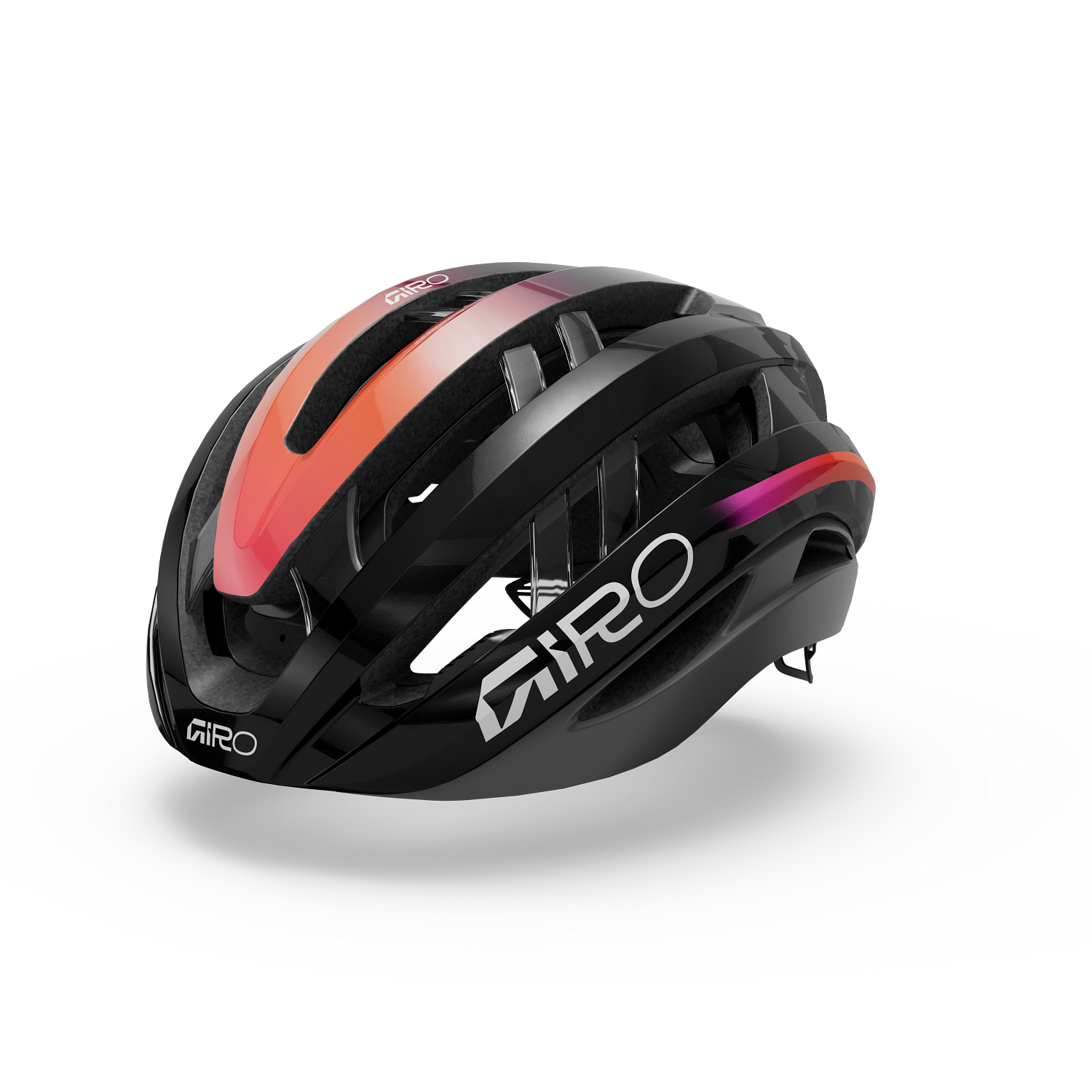
Giro also lists Aries Spherical Special Edition under a distinct style number, 100000000300000155. Its US page calls it the same Aries Spherical helmet in two special-edition colorways and repeats the Spherical, DryCore, size, CPSC and Medium-weight information. That supports covering the edition as a finish-only variant of this assessment, not silently merging its catalogue identity with the standard 100000000300000146 route. The photograph below is the observed Sunset edition; the standard white product image elsewhere on this page is not a picture of that finish. Verify the exact style, color and size in any offer.
Research note: the claims above come from the linked manufacturer, CPSC and Virginia Tech materials. No hands-on use, fitting, crash test, weight measurement or personal riding experience is claimed.
Key specifications
Key details at a glance
| Helmet style | Half-shell |
|---|---|
| Listed fit sizes | S / M / L |
| Published circumference floor | 51 cm |
| Published circumference ceiling | 63 cm |
| US CPSC compliance stated | Yes |
| Rotational-impact design | Spherical Technology powered by Mips |
| Fit adjuster | Roc Loc 5+ Air |
| Fit adjustments described | retention tension / fore-aft tilt |
| Manufacturer-stated CPSC Medium weight | 275 g |
Use the exact model’s instructions for operating limits, supplied equipment and version differences.
Sources for this review
Sources for this assessment
Compare the model with your own constraints
A model assessment cannot decide fit by itself. Use the finder to combine riding use, head circumference and documented features, then verify the exact helmet and instructions.