
Your needs, this model
Does it fit your priorities?
What is the main difference between Aerohead Mips II and the older Aerohead Mips?
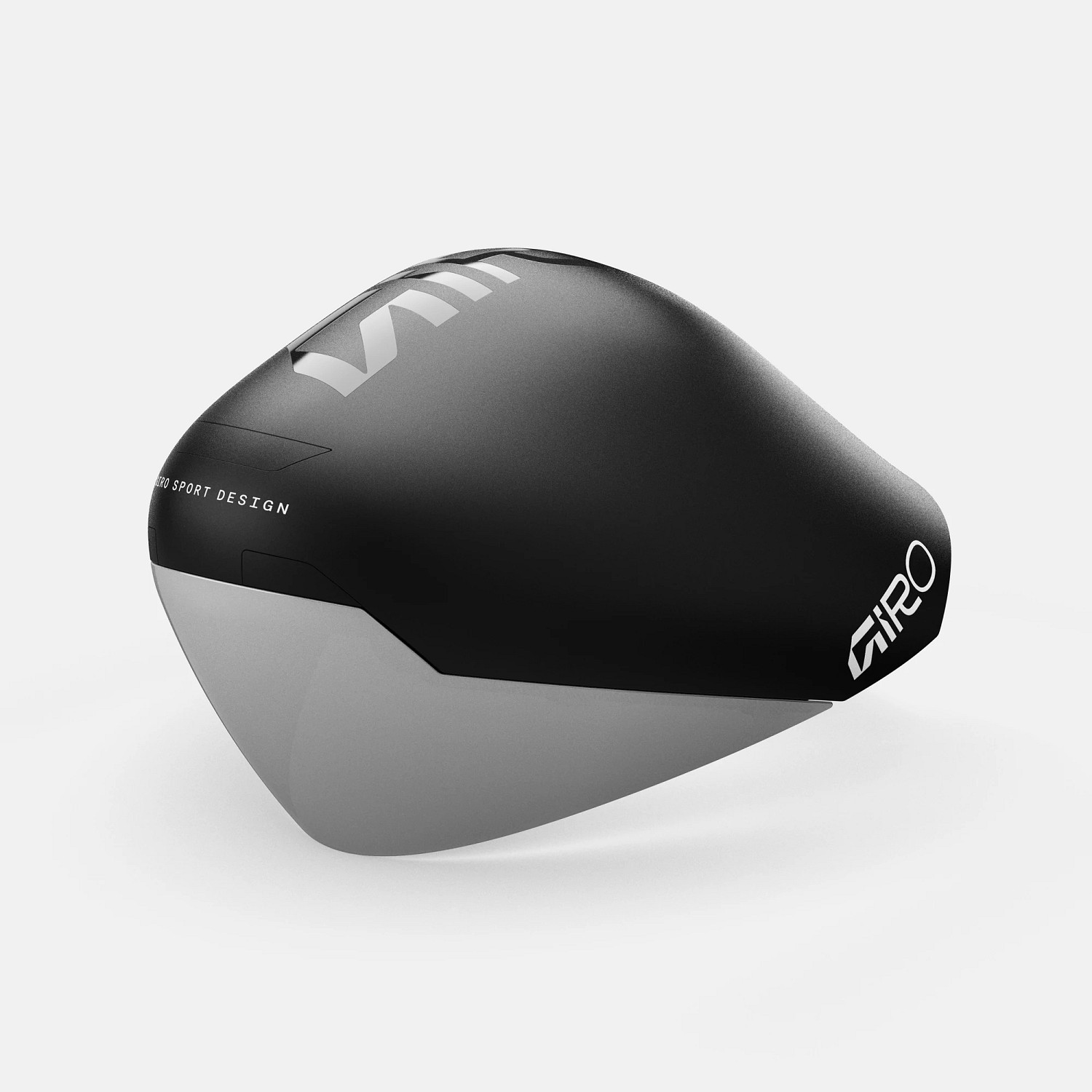
Giro specifies Mips Air Node on the II, an oversized magnetic shield positioned away from the face, and two included shields plus a padded pod. The older Aerohead Mips page describes integrated Mips and a ZEISS wraparound shield but does not list the II package; do not assume shields interchange.
Explore this need in the finder →Does a 57 cm circumference fit the listed size guide?
Giro's adult chart places 57 cm in the Medium interval of 55–59 cm. That is a reason to try size M, not proof that the shell fits your head shape or stays comfortable in a race position.
Explore this need in the finder →Does Giro explicitly state CPSC compliance for this US version?
Yes. The US product page says the Aerohead Mips II complies with the CPSC bicycle-helmet standard for persons age five and older. Verify the actual helmet's marking and version; this statement should not be transferred to a different Aerohead style.
Explore this need in the finder →The Aerohead Mips II is a distinct time-trial helmet generation, not simply an Aerohead Mips finish. Giro's US page documents a different rotational system, a larger shield position and a notably clearer included-package description. It is aimed squarely at riders considering a long-profile aero helmet for a road time trial or triathlon. The most useful evaluation is therefore about the exact fit and shield setup, not an assumption that a manufacturer wind-tunnel claim will improve anyone's result.
The II version's defining details
Giro describes the Aerohead II as its most aerodynamic time-trial helmet and says it was designed with CFD and virtual reality, then evaluated in a wind tunnel with Team Visma. That is Giro's account of its development, not an independent result or a guaranteed speed gain. The page specifies Mips Air Node: a low-friction layer attached to the comfort padding with hook-and-loop nodes that are intended to release locally in angled impacts. This differs from the standard integrated Mips wording on the older Aerohead Mips page and should not be conflated with Spherical Technology.
Visibility is another material difference. Giro says the II has an oversized magnetic shield positioned away from the rider's face to allow airflow over the brow and beneath the Roc Loc 5 Air system. It explicitly says each helmet comes with two shields—Clear and Vivid Smoke—and a padded carrying pod. The reviewed page describes a two-piece hard-shell / polycarbonate-lower-wrap construction, deep internal channeling, Wind Tunnel ventilation and IONIC+ padding. Its listed weight is 450 g for Medium (CPSC; CE). All of these are manufacturer specifications, not measurements we performed.
Check package and replacement-shield compatibility
The supplied two-shield set makes this model easier to assess for changing light than a listing that mentions only one visor, but verify the actual offer still includes both Clear and Vivid Smoke shields and the padded pod. Giro's dedicated Aerohead Mips II replacement-shield page separates regular and short styles and says both fit all helmet sizes, with the short version providing less shield length. That is specific to the II in the product wording. The separate older Aerohead shield page is labeled for the Aerohead Mips. Do not assume that the products' similar shape or magnetic anchors make generations or replacement shields interchangeable.
The magnet attachment matters in practical setup: it can be removed when appropriate, while the position away from the face changes the airflow route the design is meant to support. Before riding, follow the manufacturer's instructions, check the installed shield is secure and use a position that preserves clear vision. This article did not test the mounting, visibility, drag or airflow.
Fit and documented safety status
The product page lists S, M and L. Giro's shared adult chart gives S as 51–55 cm, M as 55–59 cm and L as 59–63 cm, and recommends a try-on. A 57 cm measurement therefore lands inside the Medium guide range. It says nothing by itself about head shape or whether a deep aero shell stays comfortable in the rider's own position. Giro identifies Roc Loc 5 Air and describes fit-tension and fore-aft tilt adjustments; use the exact setup instructions and assess the shell with the intended shield installed.
Unlike the captured unsuffixed Aerohead Mips page, the Aerohead II US certification field explicitly states compliance with the CPSC bicycle-helmet standard for persons age five and older. Verify the exact physical marking, model, instructions and package rather than transferring that statement to an older Aerohead listing. The general CPSC guide also cautions against treating helmet features as a promise against every injury. Mips Air Node is a design feature, not a personal crash-outcome guarantee.
Compare the version, not just the name
The older Aerohead Mips page describes conventional integrated Mips, a ZEISS wraparound eye shield and the same named Roc Loc 5 Air retention system. Its page shows a 450 g Medium weight but does not explicitly state US CPSC compliance in the captured certification field. The S-suffixed Aerohead Mips route uses similar product language but does state CPSC compliance. The II is more clearly distinguished: Mips Air Node, the oversized shield set, two included lenses and a padded pod. Those are useful version boundaries when comparing listings or ordering replacement parts.
Giro's aerodynamic language and wind-tunnel description may help a time-trial rider decide whether this design belongs on a try-on shortlist. The US product page does not give a comparative protocol, measured time saving, independent drag number, head-shape profile or cooling test. No external rating for this exact current version is cited here. Its 450 g CPSC/CE Medium figure is the manufacturer's listed value, not a scale measurement or a comparison measured on a shared basis with another helmet.
Who should consider it
Consider the Aerohead Mips II if a road time trial or triathlon is the intended use, you want Giro's Air Node system, and its longer aero format and shield setup work for your fit and position. It is a poor evidence-based match for a rider requiring an explicitly documented trail, gravel, downhill or full-face role: the reviewed page does not establish those activities. Before ordering, check style 100000000300000150, size, color, two shields, carrying pod, physical standard label and return conditions. Review current Giro and CPSC notices as well, particularly if considering a used helmet with uncertain history.
Key specifications
Key details at a glance
| Helmet style | Aero time-trial helmet |
|---|---|
| Listed fit sizes | S / M / L |
| Published circumference floor | 51 cm |
| Published circumference ceiling | 63 cm |
| US CPSC compliance stated | Yes |
| Rotational-impact design | Mips Air Node |
| Fit adjuster | Roc Loc 5 Air |
| Fit adjustments described | vertical positioning / fit tension / fore-aft tilt / contact points |
| Manufacturer-stated CPSC Medium weight | 450 g |
| Manufacturer-stated Medium weight | 450 g |
| Eye shield described | Yes |
| Eye shield type | oversized magnetic shield positioned away from the face |
| Shields stated in package | 2 |
| Padded carrying pod stated | Yes |
Use the exact model’s instructions for operating limits, supplied equipment and version differences.
Sources for this review
Sources for this assessment
- Giro Aerohead Mips II — observed US style 100000000300000150, Matte Black / M
- Giro Aerohead Mips II — US style 100000000300000150 page
- Giro Aerohead Mips II Helmet Shield — replacement compatibility and regular/short options
- Giro US bicycle helmet size chart
- Giro US recall notices
- CPSC — Which Helmet for Which Activity?
Compare the model with your own constraints
A model assessment cannot decide fit by itself. Use the finder to combine riding use, head circumference and documented features, then verify the exact helmet and instructions.