
Your needs, this model
Does it fit your priorities?
What does the XR Mips chart show for a 56 cm head measurement?
Bell's exact US style-151 chart lists S at 52–56 cm and M at 55–59 cm, so 56 cm falls in both rows. The observed Fluorescent Yellow / M SKU is BL-7206383, but this overlap is not a recommendation to pick either size or a personal fit result; try the exact helmet on using Bell's instructions.
Explore this need in the finder →Does the XR Mips meet the finder's Spherical / Mips requirement?
No. Bell names Mips Evolve on exact US style 151; it does not name Spherical Technology powered by Mips for XR Mips. The two XR models have separate style numbers and designs, so the XR Mips stays out when that narrower option is required.
Explore this need in the finder →Does Bell describe this exact model for commuting as well as road and gravel?
Yes. The style-151 page says XR Mips is intended to be as comfortable on road, gravel or trail as commuting to work; this review maps that explicit use wording to the urban/commuting activity choice without treating it as an independently tested comfort claim.
Explore this need in the finder →Does the observed helmet package include the compatible rear LED light?
Bell says the XR Mips is compatible with its custom Blackburn Grid COB light, but the captured page does not confirm that light is included in the Fluorescent Yellow / M package. Verify exact contents rather than treating compatibility as an included accessory.
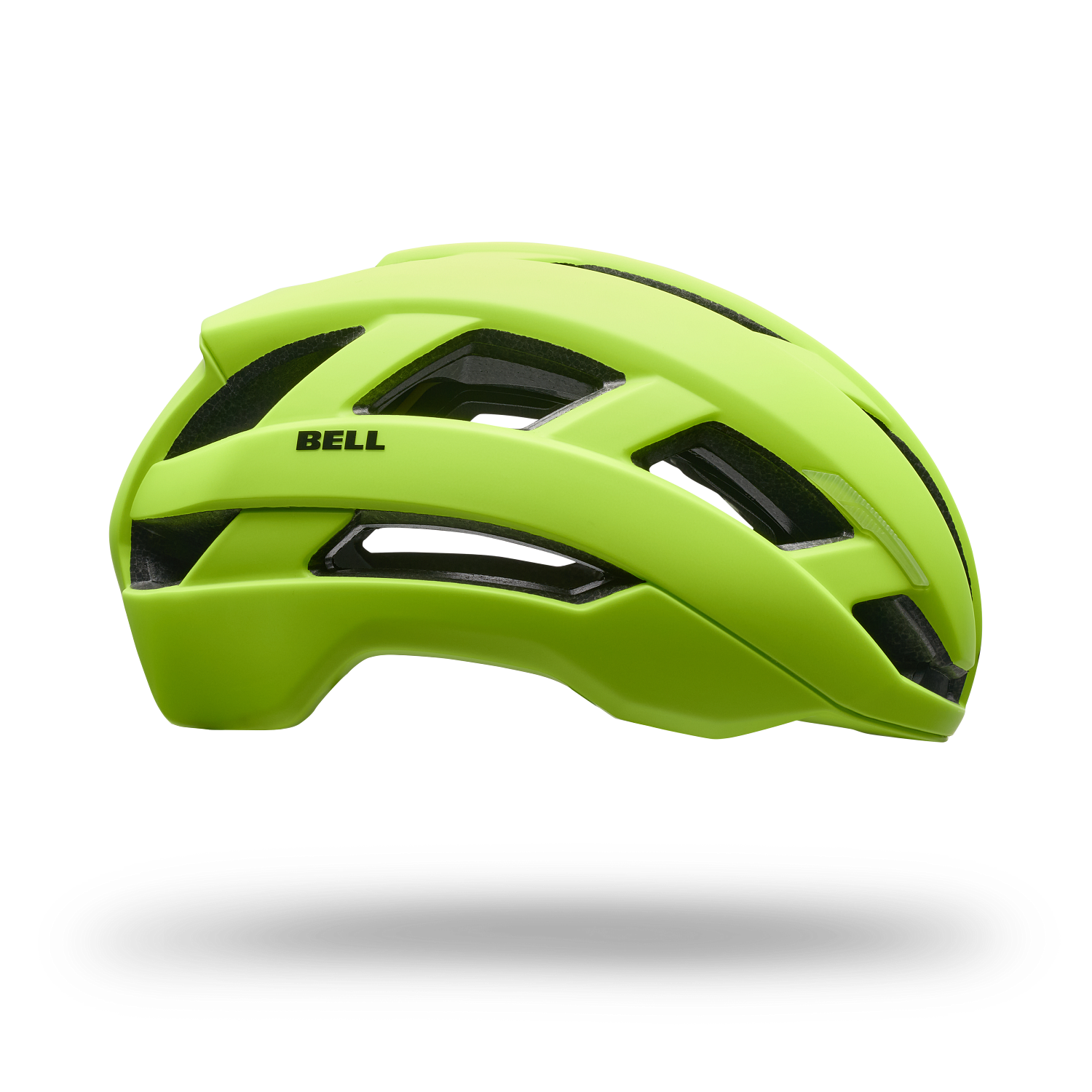
Explore this need in the finder →Bell’s XR Mips is a road-and-gravel half-shell that its exact US product page also describes for trail riding and commuting to work. The observed edition is style 100000000300000151 in Fluorescent Yellow / M, SKU BL-7206383. This review assesses Bell’s model-specific documentation; it is not based on a ride, fit session, test or inspection of a physical helmet.
What distinguishes this XR
Bell uses XR Mips for a separate style from XR Spherical. On this page, the rotational-impact system is named Mips Evolve. That distinction matters if you are sorting by a specific engineering requirement: a generic Mips name is not the same as Bell’s separately named Spherical Technology powered by Mips. The XR Mips review therefore does not claim that it meets the finder’s Spherical/Mips filter or that it offers the same design as XR Spherical.
The product page describes a “Deep Road” fit and calls the helmet an all-rounder, then says it is suited to road, gravel, trail and commuting use. I treat those as Bell’s stated uses, not independent proof of comfort or performance in each setting. The page lists a Fidlock magnetic buckle, Ionic+ antimicrobial comfort padding, eyewear-storage features, No-Twist Tri-Glides and a Sweat Guide. Each is a manufacturer-listed feature; none establishes that a particular wearer’s glasses fit, that the padding will suit them, or that a buckle or strap has been tested here.
Read the size rows as a screen, not a recommendation
Bell’s exact style-151 page shows S, M and L and gives corresponding circumference ranges of 52–56 cm, 55–59 cm and 58–62 cm. The rows overlap at 55–56 cm and 58–59 cm. At 56 cm, both S and M are inside the printed bands; the overlap does not tell you which size to select. At 59 cm, the same is true for M and L. This review keeps the chart intervals intact rather than converting them into a single fit promise.
The observed Fluorescent Yellow configuration is the Medium SKU BL-7206383, not a measurement of any reader’s head. Bell’s general size-chart guidance calls for a flexible tape held level above the eyebrows and a repeat measurement. Use the current instructions for the exact helmet, then try that size on and check the position, retention, strap adjustment and pressure points. A circumference match cannot account for every head shape or replace a try-on.
Standards and the manufacturer’s weight line
Bell’s certification panel reads “CPSC Bicycle*” and “CE EN1078.” This supports a model-page statement for the US bicycle-helmet standard; it is not an inspection of the physical label on a seller’s unit. The separate CE reference is not a substitute for the US CPSC requirement. If the standard is essential, check the label on the exact helmet and make sure the offer has not substituted a different version.
Bell lists 310 grams for size M. Since the observed SKU is M, the number is relevant to this configuration as a manufacturer-reported specification, but no helmet was independently weighed. The page does not give S or L weights, a numeric vent count or an airflow result. A printed weight and ventilation language can support comparison, but they do not predict comfort or cooling for an individual rider.
One accessory note, with a package caveat
Bell says XR Mips is compatible with its custom Blackburn Grid COB rear LED light, which fits into a large rear vent. That is compatibility information, not evidence that the observed helmet package includes the light. The page also does not establish the exact contents of every color and size offer. If a rear light is important, confirm the precise package and the light’s model compatibility rather than relying on a general accessory statement.
Where the evidence stops
The exact product data classify this as a half-shell, and the manufacturer image shows the open-face shape. The available page does not document a removable chin bar or a child-specific version or fit plan. Its general “unisex” label and standard wording do not convert it into a youth-sized model. Nor does a product page establish that an individual helmet is authentic, unused, free of crash damage or unaffected by a later safety notice.
The saved Bell and CPSC recall notices checked for this review do not name XR Mips style 151 or SKU BL-7206383 among their listed affected models. That dated name check is not an individual-unit clearance and cannot establish the history of a used helmet. Check current notices and ask about impact history when evaluating an exact offer. Bell’s general bicycle-helmet manual provides fitting and care guidance, but it is not a model-specific XR Mips setup sheet.
Who might keep it on the shortlist?
The evidence makes XR Mips a plausible model-page candidate for a rider comparing a documented road, gravel, trail or commute half-shell, an explicit Mips Evolve design and an S/M/L chart spanning 52–62 cm. It is a poor match for someone who requires the specifically named Spherical/Mips design, a confirmed child plan, a documented chin-bar arrangement, a guaranteed included rear light or an exact fit verdict. Before choosing, match style 151, color and intended size across the listing and physical label, check package contents and current instructions, confirm return terms, and verify current safety notices. No price, stock position, seller quality or customer experience is asserted here.
Style 142: an additional red-and-black configuration
Bell’s exact US style-142 page (Gloss Red/Black / M, SKU BL-7152673) repeats style 151’s S/M/L chart, Mips Evolve features, CPSC/CE wording and 310 g M claim. No functional difference is documented; style 142 is a finish variant, not proof that individual helmets are identical.
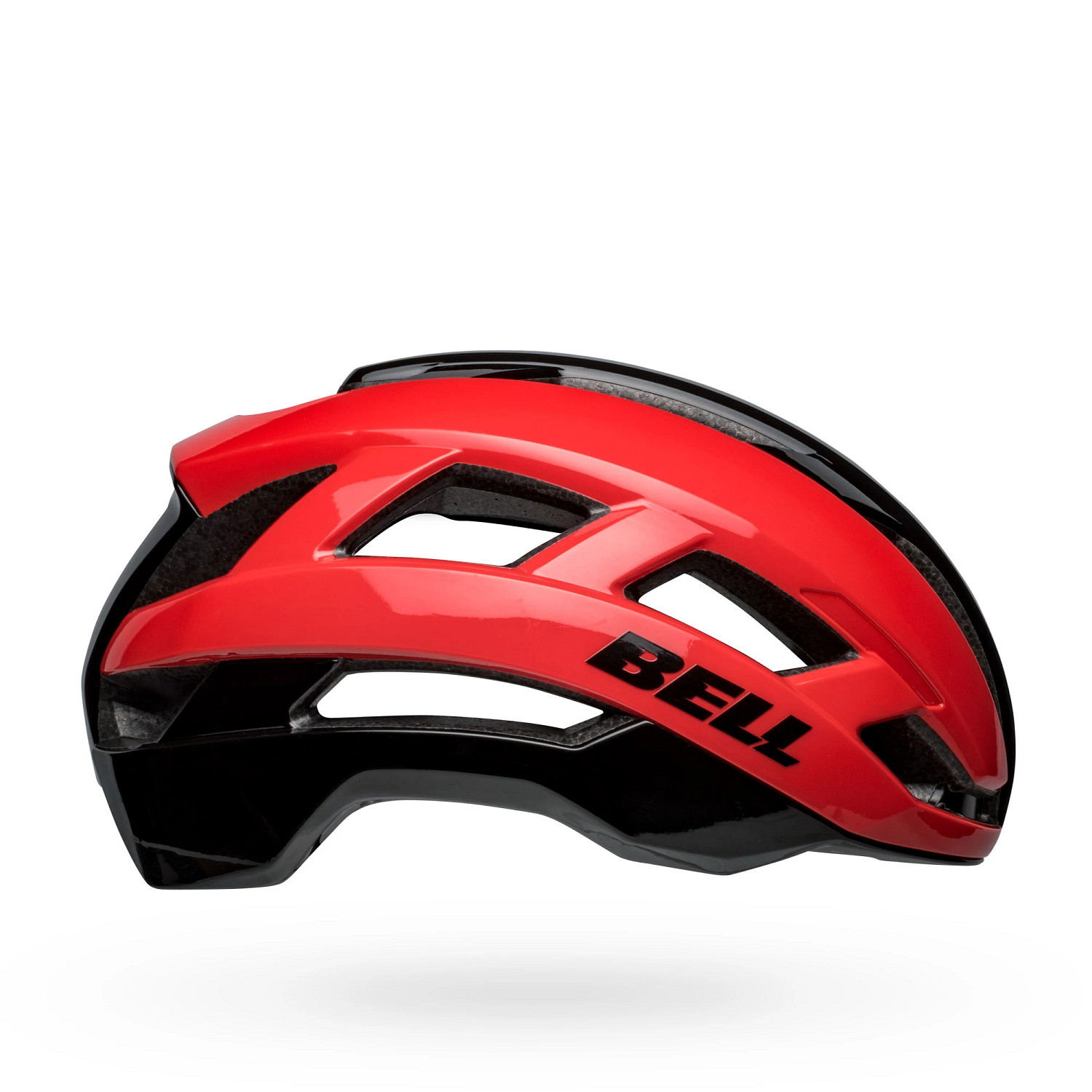
The page calls the Blackburn light compatible, not included. Verify fit, label, condition, package and return terms; style 143’s LED inclusion is not transferred.
Key specifications
Key details at a glance
| Helmet style | Half-shell |
|---|---|
| Listed fit sizes | S / M / L |
| Published circumference floor | 52 cm |
| Published circumference ceiling | 62 cm |
| US CPSC compliance stated | Yes |
| Rotational-impact design | Mips Evolve |
| Fit adjustments described | Bell describes a 'Deep Road' fit and lists No-Twist Tri-Glides and a Sweat Guide. The exact page does not name a dial or state adjustment travel; head shape, retention fit and comfort were not assessed. / The exact style-151 XR Mips and style-142 Falcon XR Mips pages both list S, M and L circumference intervals of 52–56, 55–59 and 58–62 cm. The S/M and M/L overlaps remain visible; a chart match is only a reason to try the exact helmet on. / Bell's size-chart guide says to hold a soft tape level about 1 inch (2.5 cm) above the eyebrows and repeat the measurement; use Bell's current fitting instructions for the exact model. |
| Manufacturer-stated Medium weight | 310 g |
Use the exact model’s instructions for operating limits, supplied equipment and version differences.
Sources for this review
Sources for this assessment
- Bell US Road and Gravel directory card for XR Mips style 100000000300000151, Fluorescent Yellow / M, SKU BL-7206383
- Bell exact US XR Mips style-151 page, selected Fluorescent Yellow / M, SKU BL-7206383
- XR Mips model-specific S/M/L circumference chart embedded on Bell's exact style-151 US product page
- Bell US helmet size-chart guide and measurement instructions
- Bell manufacturer image served from the exact XR Mips style-151 Fluorescent Yellow product page
- Bell Bicycle Helmet Owner's Manual Part B5000433-F; general bike-helmet fit, care and replacement guidance, not a model-specific XR Mips setup sheet
- Bell US recall notice page snapshot screened by model name; not an individual-unit clearance
- CPSC Bell Sports bicycle-helmet recall 25-359; affected-model notice screen checked for this model name
- Bell exact US Falcon XR Mips style-142 page, selected Gloss Red/Black / M, SKU BL-7152673
- Falcon XR Mips style-142 S/M/L circumference chart embedded on Bell's exact selected US page
- Bell US guide to measuring, trying on and fitting a bicycle helmet
- Bell manufacturer image served from the exact selected Falcon XR Mips style-142 Gloss Red/Black page
Compare the model with your own constraints
A model assessment cannot decide fit by itself. Use the finder to combine riding use, head circumference and documented features, then verify the exact helmet and instructions.