
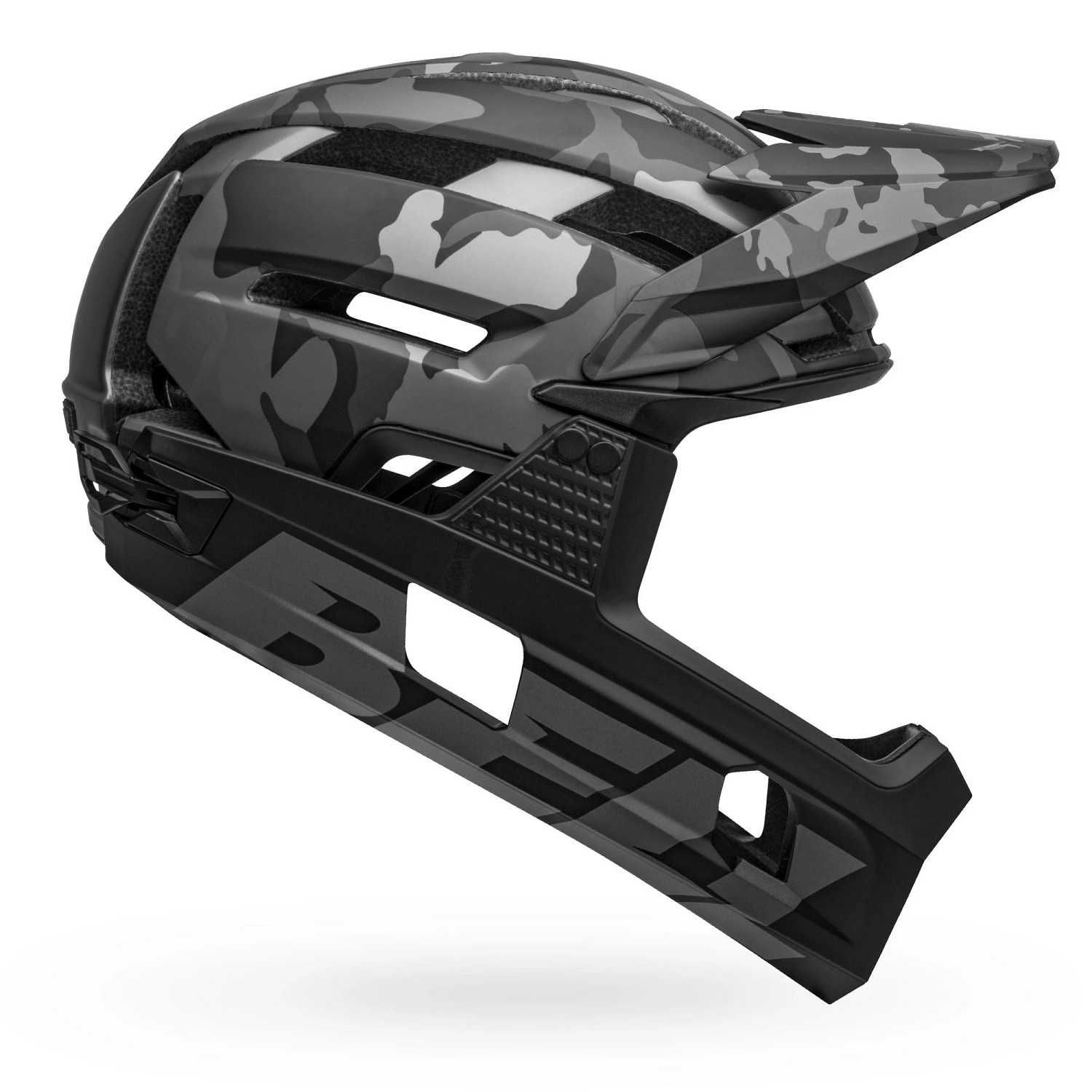
Your needs, this model
Does it fit your priorities?
What makes the Super Air R different from the non-R Super Air Spherical?
Bell describes the R as the model with a two-click removable chin bar; the separate non-R Super Air Spherical is an open-face helmet with an optional bar accessory. Both exact pages name Spherical Technology powered by Mips, but the functional package difference is not a comparative crash result. Confirm the exact offer and owner’s manual.
Explore this need in the finder →What do the R's 55–56 cm chart overlaps mean?
Bell's exact style-093 chart prints S 52–56 cm and M 55–59 cm, so 55–56 cm falls in both rows. At 58–59 cm, M and L also overlap. These are chart candidates to try, not a size recommendation or personal fit result; the observed SKU is S.
Explore this need in the finder →Which US standards and condition are documented for this observed R style?
Bell's exact US page states the CPSC bicycle-helmet standard for persons age five and older and reports 640 g at size M; it does not list an ASTM downhill standard. The same page marks style 093 as an archive-sale item and sold out as of the check date. Neither statement inspects a seller's physical unit or establishes child-specific fit.
Explore this need in the finder →This assessment is based on Bell’s US product information and the manufacturer’s captured mountain-bike listing, not on a ride, fit session, weighing or impact test. The exact observed configuration is Super Air R Spherical, style 100000000500000093, Matte/Gloss Black Camo, size S, SKU BL-7113676. Bell’s exact page identifies the style and color and lists S, M and L. The saved exact-route capture and same-day recheck show an archive-sale banner, a Sold Out message and a disabled Add to Cart control for this route. That dated page state is not proof that no seller has an offer or that another color or package is equivalent.
The R is the removable-bar version
The practical distinction from the separate Super Air Spherical is its removable chin bar. Bell describes the R as an all-mountain model with a two-click removable bar and says it attaches without tools. The R’s manufacturer image shows the bar attached. The non-R Super Air Spherical is presented as an open-face trail helmet; Bell says a compatible bar can be added as an optional accessory. These are two distinct products, not a single model whose package contents can be assumed from the shared “Super Air” name.
That distinction can matter to a rider who wants the option to remove a bar between different parts of a trail day, but “removable” is not a claim that either setup is right for every discipline. Bell warns that chin bars have limits and directs owners to the helmet’s manual. Its exact US page states the CPSC bicycle-helmet standard for people age five and older, but the page does not list an ASTM downhill standard. Do not infer downhill certification, an injury outcome, or a child-specific fit from the trail language, removable bar or age line. Check the physical label and the manual for the exact helmet and the configuration you would actually use.
Shared Spherical design, different shell setup
Bell describes Spherical Technology powered by Mips as a ball-and-socket arrangement in which the outer liner can rotate around the inner liner. The same design family, Float Fit dial, adjustable visor, Overbrow ventilation channels, Sweat Guide, goggle gripper and integrated breakaway camera mount appear on the exact R page and on the non-R Super Air page. These are manufacturer descriptions of construction and intended functions. They do not demonstrate that the helmet will fit a particular head, that a particular goggle or camera will work, or that the design changes an individual crash result.
Bell reports 640 g for the R in size M. That is a manufacturer-listed number, not a measurement here; the observed configuration is size S, and the exact page does not provide a size-S mass or split the figure between bar-attached and bar-removed use. The corresponding non-R page reports 410 g for size M. The figures signal that the packages differ, but they are not a like-for-like laboratory comparison: they are not independent measurements and do not describe every size or configuration.
Use the chart as a screen, not a verdict
The R page lists S at 52–56 cm, M at 55–59 cm and L at 58–62 cm. The observed SKU is the S row. Bell’s chart overlaps at 55–56 cm and again at 58–59 cm; that means adjacent size rows can be returned for a measurement, not that a shopper should choose one by number alone. Bell’s size guide recommends a soft tape about an inch above the eyebrows, level and snug rather than tight, then measuring twice and using the larger reading. That is a starting procedure, not evidence about this helmet’s shape or a personal fit test.
Bell calls the exact R listing an all-mountain package and places the observed card in its US MTB category, so the site treats trail use as a source-backed library tag. The page does not establish road, gravel, commuting or child-specific use. The R’s size run, Spherical label and bar mechanism should be checked on the exact offer rather than transferred to the older Full-10 Spherical, Super Air Spherical or another Bell helmet.
What to verify before considering an offer
Start with the model name, style 100000000500000093, observed Matte/Gloss Black Camo S configuration and SKU BL-7113676. Confirm whether a listing is the helmet with its bar and the correct attachment parts, not a standalone replacement chin bar, visor or another Super Air package. Check that the size chart and color still correspond to the offered item, then try the exact helmet on with its retention system adjusted according to Bell’s instructions. Inspect the bar attachment points and closure, straps, shell, liner and label; ask about return terms and the helmet’s storage and impact history if the offer is not new. Recheck the current recall information and do not treat this dated model-name screen as unit-level clearance.
For comparison, read the Super Air Spherical assessment: it covers the open-face model and its separately sold optional bar. The useful question is not which product sounds more protective, but whether the exact size, bar arrangement, certification information, included package and condition meet the rider’s documented needs. No comparative crash test or personal fit evaluation was conducted for this review.
Key specifications
Key details at a glance
| Helmet style | Convertible MTB helmet |
|---|---|
| Documented removable chin bar compatibility | Yes |
| Chin bar included with observed model package | Yes |
| Listed fit sizes | S / M / L |
| Published circumference floor | 52 cm |
| Published circumference ceiling | 62 cm |
| US CPSC compliance stated | Yes |
| Rotational-impact design | Spherical Technology powered by Mips |
| Fit adjuster | Float Fit |
| Fit adjustments described | Bell describes a lightweight Float Fit dial for adjustment, integrated with Mips; no personal fit or adjustment range was measured. / The exact R page describes a two-click removable chin bar. Bell warns that chin bars have limits and directs the owner to the helmet manual. |
| Manufacturer-stated Medium weight | 640 g |
Use the exact model’s instructions for operating limits, supplied equipment and version differences.
Sources for this review
Sources for this assessment
- Bell US MTB directory card, Super Air R Spherical style 100000000500000093, Matte/Gloss Black Camo / S, SKU BL-7113676
- Bell exact US Super Air R Spherical style 100000000500000093, Matte/Gloss Black Camo
- Bell distinct US Super Air Spherical style 100000000500000094 page, consulted only for the non-R comparison
- Bell US helmet size-chart guide and measuring instructions
- Bell US helmet recall notice, checked for named model families
- CPSC 2025 Bell Sports bicycle-helmet recall, listed affected models and styles
- Bell manufacturer image served from the exact Super Air R Spherical style-093 page
- Bell exact US Super Air R Spherical style-093 page rechecked for the observed Matte/Gloss Black Camo route; archive banner and sold-out state retained as a dated capture
Compare the model with your own constraints
A model assessment cannot decide fit by itself. Use the finder to combine riding use, head circumference and documented features, then verify the exact helmet and instructions.