
Your needs, this model
Does it fit your priorities?
What does the Full-10 Spherical name document about its rotational-impact design?
Bell describes Spherical Technology powered by Mips as a ball-and-socket arrangement that lets its outer liner rotate around the inner liner. That is a manufacturer's design description, not a measured crash result or a guarantee about an individual impact.
Explore this need in the finder →Does Bell's size chart place a 56.5 cm measurement in a Full-10 Spherical row?
Yes. Bell's M row is 21 5/8–22 1/2 inches, about 54.9–57.2 cm after conversion, so 56.5 cm falls inside that printed band. The captured directory card was M. Confirm the exact chart for the offer and try it on; the number does not establish head shape or fit.
Explore this need in the finder →Does the exact US Full-10 Spherical page document the CPSC standard?
Yes. Bell's exact US page states that the helmet complies with the CPSC bicycle-helmet standard for persons age five and older. That is model-page evidence, not a label check on a particular unit and not child-specific fit evidence.
Explore this need in the finder →Identify the exact Full-10 version first
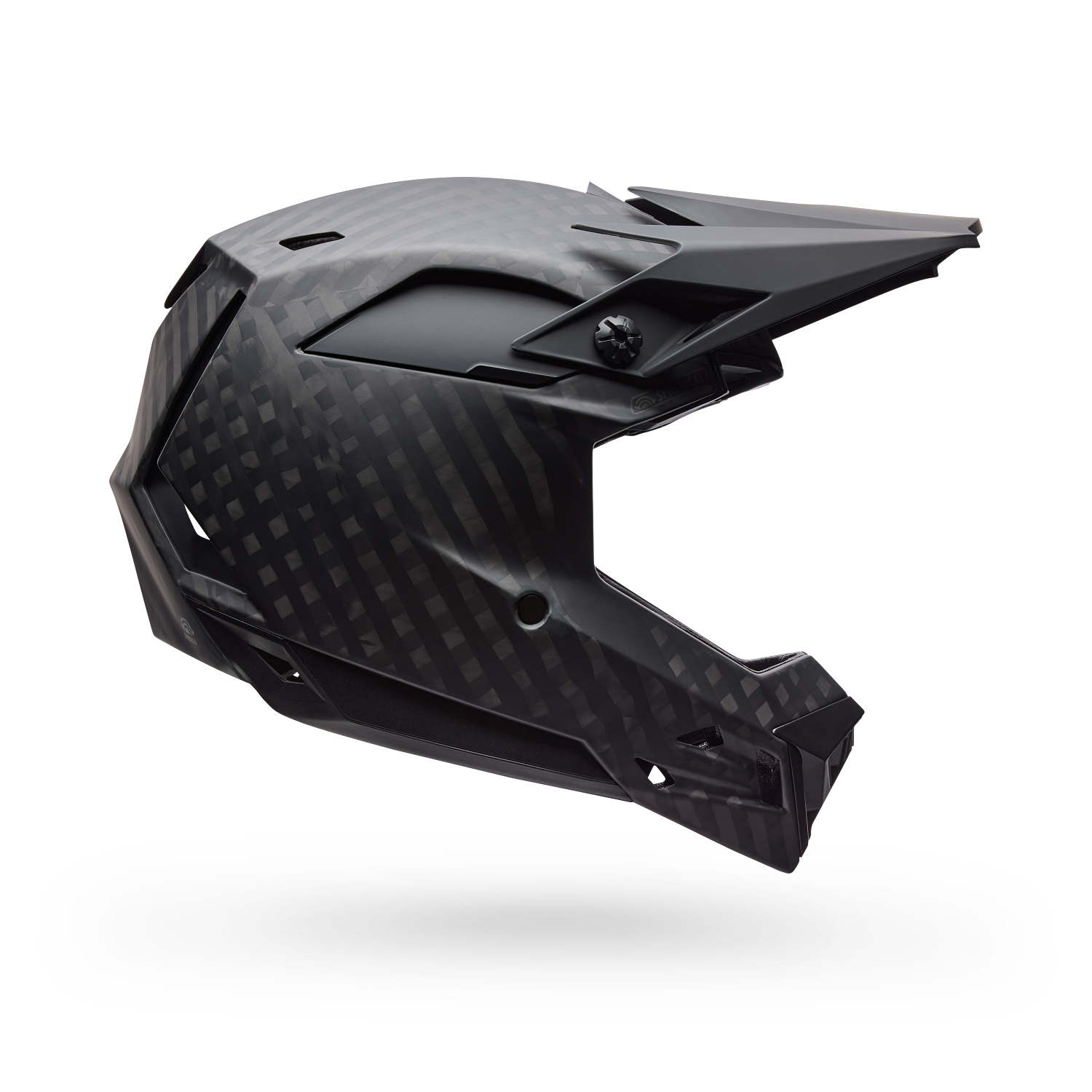
This assessment concerns Bell's US Full-10 Spherical, style 100000001500000020, in the Matte Black / M configuration shown on Bell's MTB directory card (SKU BL-7203673). It is a full-face downhill bicycle helmet, not a road lid or a generic name for every Full-10. Bell's exact product page still identifies the style, but now places it in the archive and marks it sold out. That is a useful lifecycle warning, not proof that every retailer has no remaining item or that a third-party listing describes a safe, correctly stored helmet. The style is treated here as an earlier model so it only appears in comparisons when the visitor explicitly includes earlier generations.
What the manufacturer's feature language supports
Bell positions this design for downhill and gravity riding and describes a unidirectional carbon shell with its Spherical Technology powered by Mips. The manufacturer explains that the outer liner may rotate around the inner liner in a ball-and-socket arrangement. This tells a shopper what kind of architecture Bell says is present. It does not show an independent impact result, quantify a personal reduction in injury risk or let an author predict how a particular crash would turn out.
Bell also names a channelled Thermal Exchange Airflow System, a variable-density liner, a panoramic goggle opening and an adjustable Flying Bridge visor. The separate Full-10-versus-Full-9 comparison describes forward-facing and rear exhaust openings, plus openings in the chin bar. Those are manufacturer descriptions of design. We did not count vents, measure cooling or test eyewear fit. Treat the broad opening as a fit clue to check with your own goggles, not a guarantee that every frame seals comfortably.
The page describes magnetic, removable cheek pads with an emergency-release function, quick-drying Ionic+ padding, titanium D-rings and an integrated camera mount designed to break away. The comparison discusses optional cheek-pad thicknesses, but the archived US page does not establish which optional pads a particular seller includes. Nor does an emergency-removal feature substitute for the instructions of responders or for inspecting the exact helmet after an impact.
Size evidence is specific, but fit still is not
Bell's style chart lists XS/S at 20 1/8–21 5/8 inches, M at 21 5/8–22 1/2 inches, L at 22 1/2–23 1/4 inches and XL/XXL at 23 1/4–24 7/8 inches. Converted with 2.54 centimetres per inch, these rows are approximately 51.1–54.9, 54.9–57.2, 57.2–59.1 and 59.1–63.2 cm. The sampled directory configuration was M, and Bell lists a 1,000 g manufacturer weight for size M; that number is not an independent weighing and should not be transferred to the other sizes.
Because the chart's endpoints meet, a measurement at a shared edge can fall within both adjacent rows in a numeric finder. That is a faithful way to surface both chart alternatives, not a size recommendation. Bell's measuring instructions call for a level tape above the brows and repeated readings, using the larger reading. Head circumference cannot reveal pressure, stability or the shape a particular shell will suit. Try the exact model on, and follow Bell's current fit instructions before riding.
Standards and use boundaries
Bell's exact US page states compliance with the CPSC bicycle-helmet standard for persons age five and older and lists CE EN 1078:2012 and NTA 8776 for e-bike use. Its Full-10 comparison also says the model meets ASTM downhill and BMX standards, but the exact US page does not give a numbered suffix for those references. No label was inspected on an individual helmet. The age statement does not turn the model into a youth helmet; this review has no child-specific plan or fit evidence for it.
The broad activity match in our finder is trail / mountain biking because Bell lists the model in its US MTB category and positions it for downhill use. It is not a road, gravel or commuting recommendation. If CPSC wording or Spherical/Mips is essential, the exact page supports both, but the actual product label and exact version still need checking. Compare the materially different Sanction 2 DLX Mips: Bell describes that model's Mips Essential feature, not this Full-10's Spherical design. Giro Insurgent Spherical is another gravity full-face design with Spherical/Mips wording, but its reviewed US page did not establish CPSC compliance. Similar marketing terms are not a reason to transfer a standard or chart between models.
Who should keep it on a shortlist?
It is worth investigating only if the rider genuinely needs a full-face downhill helmet, wants the documented Spherical/Mips arrangement, and can verify the exact size, condition and model identity. Its manufacturer-stated size-M weight and carbon-shell design are meaningful differences from lighter half-shell formats, but they do not constitute a performance ranking. There is no documented head-shape profile, personal fitting result, measured airflow result or independent crash test in this assessment.
Before ordering a left-over or used example, compare the style number, color, size and chin strap with the listing and the helmet label. Ask what pads, visor hardware and camera-mount parts are actually supplied; inspect the shell and retention components and establish the item's storage and impact history. Check current Bell and CPSC recall information, the seller's return terms and whether the exact model is still obtainable. Do not treat a sold-out manufacturer page or another Full-10 suffix as proof of stock, equivalence or fit. Our safety-evidence guide explains why a standards statement and an individual unit check answer different questions.
Key specifications
Key details at a glance
| Helmet style | Full-face MTB helmet |
|---|---|
| Listed fit sizes | XS/S / M / L / XL/XXL |
| Published circumference floor | 51.12 cm |
| Published circumference ceiling | 63.18 cm |
| US CPSC compliance stated | Yes |
| Rotational-impact design | Spherical Technology powered by Mips |
| Fit adjustments described | Bell describes magnetic removable cheek pads and a Magnefusion emergency-release design; cheek-pad removal is not a dial-based circumference adjustment. / Bell's Full-10 comparison describes five optional cheek-pad thicknesses from 30 to 50 mm and two crown-pad thicknesses; the exact US seller's package contents are not established by that comparison. |
| Manufacturer-stated Medium weight | 1000 g |
Use the exact model’s instructions for operating limits, supplied equipment and version differences.
Sources for this review
Sources for this assessment
- Bell US MTB directory, observed Full-10 Spherical style 100000001500000020 card
- Bell Full-10 Spherical exact US style 100000001500000020, Matte Black / M, SKU BL-7203673
- Bell manufacturer comparison, Full-10 Spherical versus Full-9
- Bell US Full-10 Spherical size chart linked from the exact product page
- Bell US bicycle-helmet recall page, dated model-name screen
- CPSC 2025 Bell Sports bicycle-helmet recall, affected-model list
Compare the model with your own constraints
A model assessment cannot decide fit by itself. Use the finder to combine riding use, head circumference and documented features, then verify the exact helmet and instructions.